

Futureproofing local Cabbage Tree Palms

John Stapleton
03 March 2026, 5:00 AM
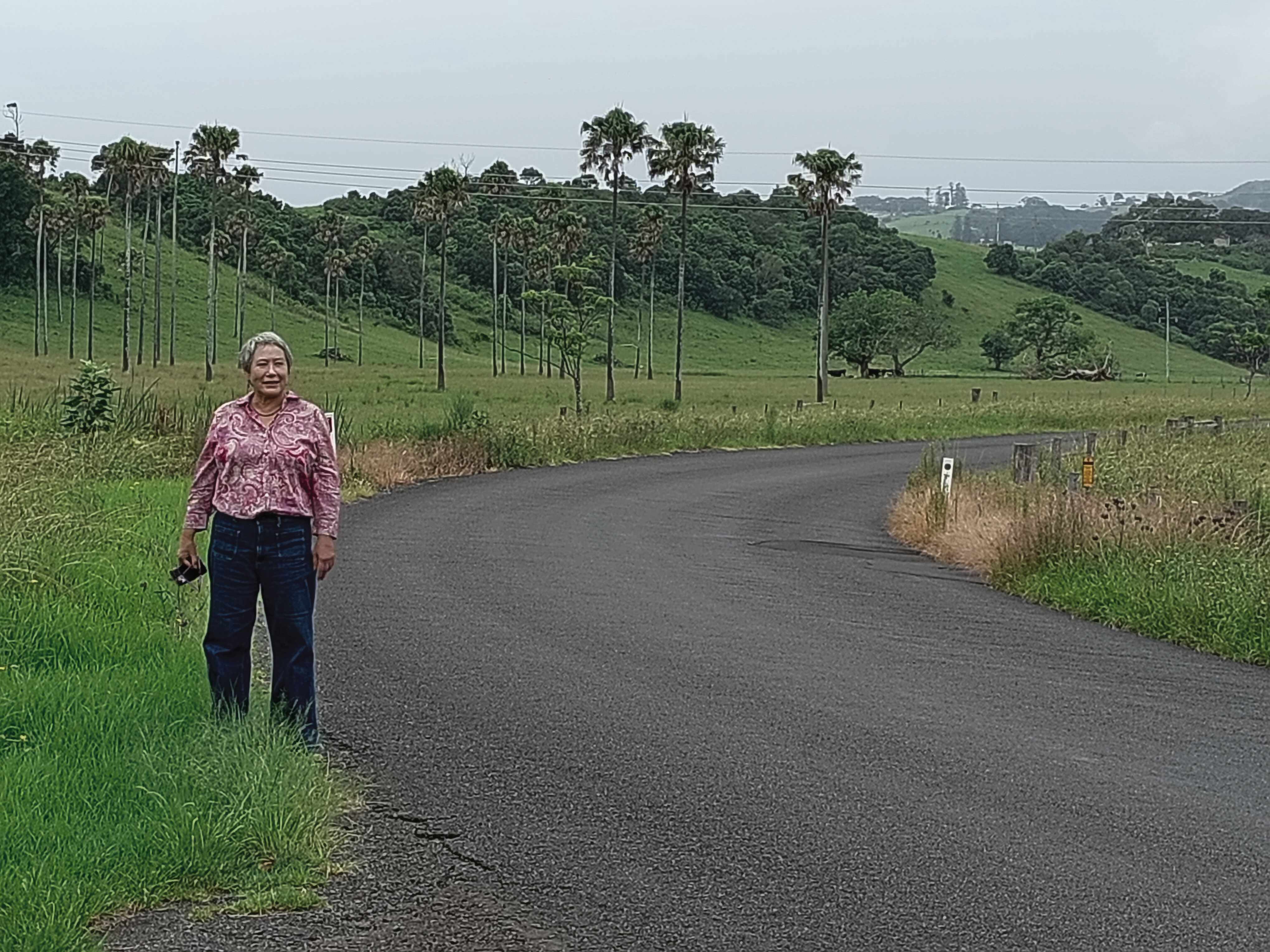 Landcare's Ailee Calderbank. Photo: The Bugle
The drenched green beauty of the Kiama hinterland is made even more evocative by its lone sentinels: cabbage tree palms.
The tall, spindly palms – remnants of the temperate rainforest that once coated the area – can soar more than 50 metres in height.
Their isolated forms, far from any smaller versions of themselves, breathe a certain solitude.
For, like humans, they normally come in family groups.
“They are lonely,” says Landcare spokeswoman Ailee Calderbank. “They are like us. They don’t do so well on their own. They need an ecosystem around them.”
Ailee and a group of Landcare volunteers are setting out to solve this problem. This Thursday they are holding a public meeting in Jamberoo to encourage local landholders to get involved.
Officially known as Future Proofing the Cabbage Tree Palm, the project was launched at the Gerringong Library in 2024. As a result of that meeting, six landholders from the Kiama and Gerringong area became involved.
Now organisers are keen to extend the project inland to the dairy properties of Jamberoo, where the sentinel palms are one of the most striking features of the landscape.
“People are always interested in them,” says Ailee. “They always wonder why the palms are out there on their own in the paddocks, and why the farmers have preserved them.”
Ailee speaks of the palms as if they were human. The answer to the first question – why they are alone – is simple enough: they are not having children.
Without the protection of a rainforest, they are prone to being trampled by dairy cows or smothered by weeds, most particularly kikuyu grass.
Cabbage tree palms are very slow-growing. They can take up to 20 years just to start forming a trunk. The taller palms can be 200 years old.
“They don’t like being lonely,” Ailee says. “I used to tell my own children, the palms we see and love, one day they are not going to be here. There are no babies coming up.
“They are a relic of our previous rainforest and forest communities. They are a reminder of what has been lost. Plants, trees, weren’t meant to live alone. We don’t fare so well on our own either.”
Ailee says the answer to the second question – why dairy farmers have preserved them to live alone in the paddocks – is steeped in mythology.
There was a belief that they were protected, which they are not.
Alexander Berry is said to have cleared all the trees around his English-style house near the Shoalhaven town named after him, but preserved the cabbage palms because tropical gardens were the height of fashion at the time.
But Berry passed away in 1873 and if he really was the inspiration for the preservation of those palms, more than 150 years later their spindly trunks and forlorn crowns look more sad than exotic.
The cheerful part of the story, however, is that with a little effort cabbage tree palms are easily protected.
Landcare volunteers usually plant them in conjunction with other rainforest trees and plants; and as long as the kikuyu grass is kept from smothering them, and animals including cows and deer are kept from eating them while they are young, the area will once again see stands of cabbage tree palms.
Not the melancholy beauty of the lonely sentinels we know today, but the lush rainforests of the past.
“This is an investment for the future,” Ailee says. “Considering how long cabbage tree palms take just to form a trunk, you might not be around, but our kids will get to enjoy these magnificent palms.”
NEWS