
Organ donors needed as Warren waits for life-saving phone call

Danielle Woolage
17 December 2025, 11:00 PM
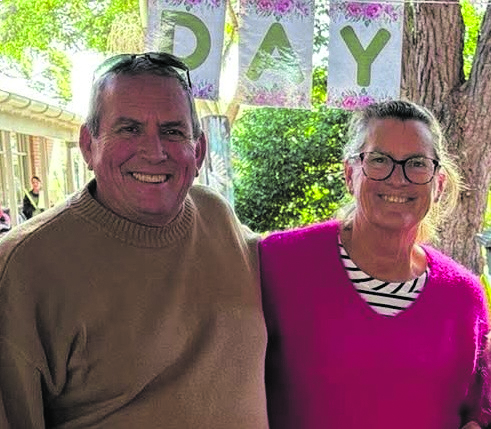 Warren and Pam Grosse.
Each time the phone rings Pam Grosse leaps out of her seat, ready to spring into action and rush her husband Warren to hospital.
“Then I sit back down again,” says the Kiama woman whose husband has been waiting for a transplant for the past 18 months after being diagnosed with chronic liver disease five years ago.
Warren, 68, is one of more than 14,000 Australians on the national organ transplant list.
“It’s a list no one wants to be on,” says Warren and all the couple want for Christmas is a phone call to say a successful donor match has been found.
“We’ve come close,” says Pam. “Twice we thought there had been a successful match but it didn’t work out. Every day we live in hope.”
Warren has managed his liver disease through diet, medication and monitoring at Sydney's Royal Prince Alfred Hospital for three years but his health began to deteriorate two years ago.
“We got to the stage where his liver was almost starting to respond but then cancer kicked in as a result of the chronic disease,” explains Pam.
Warren has had five procedures to “microwave and burn the cancer out of the liver”.
“Every time they do that, they leave a big hole in Warren’s liver and that can’t regenerate,” says Pam. “The only way he’s going to survive this is a transplant.”
While 80 per cent of Australians support organ donation, only 36 per cent have signed up to join the national donor register, which was set up in 2002.
Before that people could register to become an organ donor when they applied for or renewed their licence. This process was phased out everywhere except South Australia which now has the highest number of registered organ donors in the nation - 74 per cent and double the national average.
Pam says many people remain in the dark around organ donation registration and Pam and Warren would love to see the driver’s licence organ donation scheme reinstated in NSW.
They want the NSW Government to follow Victoria’s lead after the state’s health minister Mary-Anne Thomas announced this month that it would renew the scheme for all driver’s licence applications by 2026.
The move, which has been welcomed by Transplant Australia CEO Chris Thomas, comes more than a year after a Victorian Parliamentary inquiry into organ donation recommended the licence donor registration scheme be reinstated.
Thomas has called for all states and territories to directly link organ donation registration on a driver’s licence.
“The reality is Australia had this system for many years,” he said.
“We gave it away everywhere but South Australia and it was a mistake. We are a generous nation. People support donation. We just need to give them the solutions to confirm their support … to ensure that at least 50 per cent of our population is registered.”
Transplant Australia believes bringing back the driver’s licence scheme will also encourage young people to become registered organ donors when they apply for or renew a licence.
Pam and Warren, both former school principals, know the importance of education programs and want more to be done to advocate for increased organ donation.

“People need to be more widely informed about how to join the donor registry, now that it’s no longer linked to their driver’s licence,” says Warren. “It only takes one person to make a difference.
“When my three brothers and I got our driver’s licence years ago, we all decided as young blokes to become organ donors and it was easy.
“But a lot of people I talk to don’t realise they’ve stopped that.”
The NSW Organ and Tissue Donation Service says fewer than one in 10 young people are registered organ donors.
In a bid to boost donor numbers the service partnered with La Trobe University to find out how young people wanted to learn about organ donation.
The study found young people want to make educated decisions but need reliable information, want to learn about organ donation from a younger age and feel learning about it in school makes it a more normal topic.
This service now runs school-based education programs about organ donation in partnership with NSW Health and the NSW Education Department.
“It’s a tough conversation to have with your family because no one wants to talk about dying,” says Pam. “But Warren faces that reality every day unless he receives a transplant.”
In the meantime, while they wait in hope, Pam has channeled her anxious energy into painting.
She turns her watercolours into greeting cards and donates them to the Royal Prince Alfred Hospital, where Warren receives life-saving treatment. All funds raised from the sale of the cards support families at the hospital.
Pam and Warren have also urged people to lobby their local MPs to push for improved education around organ donation, including the reinstatement of the driver’s licence scheme.
People can sign up for the national Australian Organ Donor Register through their myGov account, the DonateLife website or by calling 1800 777 203.
NEWS