
Ovarian cancer awareness month shines light on silent killer

Danielle Woolage
17 February 2026, 7:00 AM
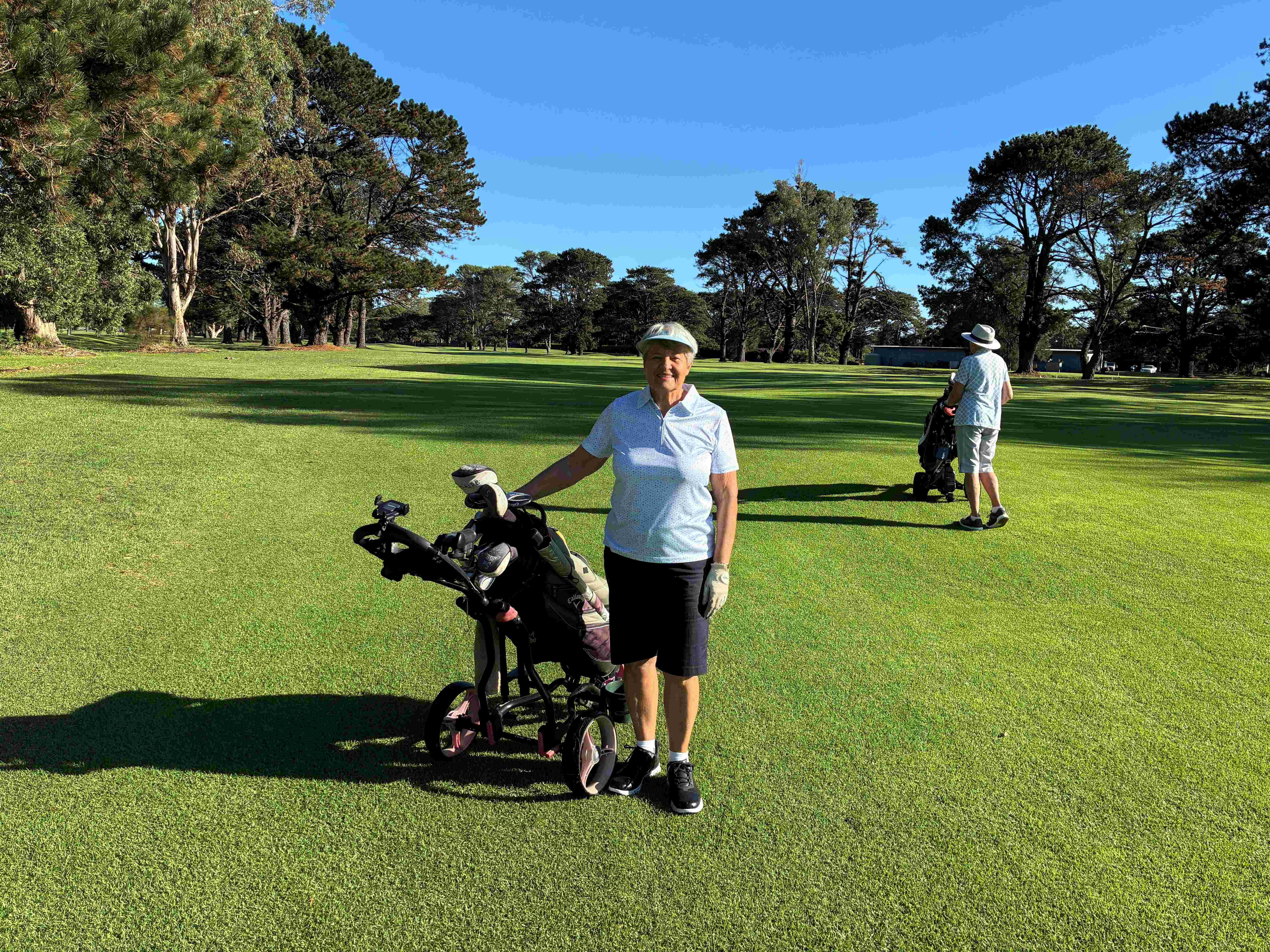 Helen Maitland at Kiama Golf Club. Photo: The Bugle
It was Friday the 13th, a cold winter morning. Kiama’s Helen Maitland had just woken from surgery to find her gynaecologist standing at the foot of her hospital bed.
“He said ‘you have ovarian cancer’, just like that,” recalls Helen.
The devastating news was delivered without preamble. Brutal, blunt and life-changing.
In March 2014, three months before her eventual diagnosis, Helen - who was 67 at the time - knew something was not quite right when she started bleeding.
“You don't bleed for nothing, not at my age,” she says.
“I went to see the doctor the next day, I didn’t muck around, he didn’t muck around. He referred me to a specialist straight away."
Helen underwent a series of blood tests and scans. The results showed nothing out of the ordinary, which is often the case with ovarian cancer.
“By the time I saw a specialist, my husband Peter and I were about to go on a six-week trip to South America and Europe,” says Helen.
“The gynaecologist said ‘go on your holiday’ and come and see me again when you get back. So I went and saw him in May and by June, Friday the 13th, an unlucky day, I was having surgery that morning.”
That afternoon Helen was diagnosed with stage one ovarian cancer. Her doctor, not wanting to leave anything to chance, referred her to an ovarian cancer specialist at Sydney’s Prince of Wales Hospital.
She had a second operation where “everything unnecessary was removed” followed by four rounds of chemotherapy.
Helen has now been cancer free for almost 12 years and says she was “one of the lucky ones” because her ovarian cancer was caught in its early stages.
More than 1900 cases of ovarian cancer are diagnosed each year and in many of those cases the disease is detected at an advanced stage, which can make it more difficult to treat.
“The thing is, women tend to ignore things like that but you just can’t, especially with ovarian cancer,” says Helen.
“Nothing was ever picked up, nothing in the blood tests, until they operated on me. Thankfully I listened to my body.”
Survival rates from ovarian cancer have not significantly improved since Helen was diagnosed more than a decade ago.
In 2011-2015 Australian women with ovarian cancer had a 46 per cent chance of surviving for five years. In 2026, of the five women diagnosed every day, the five-year survival rate is 49 per cent.
Ovarian Cancer Australia CEO Debbie Shiell says the disease is the nation’s most lethal female cancer, with three Australian women dying from it each day.
February is ovarian cancer awareness month and an opportunity for Ovarian Cancer Australia to “address knowledge gaps, help people recognise symptoms earlier, and prompt more informed conversations about ovarian cancer”.
“Many Australians do not know about the signs, symptoms and severity of the disease,” says Shiell.
It is often called a silent killer because symptoms are vague - abdominal pain, pelvic pain, bloating, frequency of urination, changes in bowel habits, weight loss or gain.
“These are symptoms women might feel most days and often by the time symptoms and signs start to appear the cancer has spread,” she says.
“This disease affects women of all ages but we do know that the most common age for diagnosis is around 62, just after menopause.
"What we ask is for women to listen to their bodies and to get checked out and keep getting checked out until they feel like they have been heard.”
It’s a message echoed by oncologist Dr Catherine Shannon, who wants women to be aware that the onset of menopause and perimenopause can sometimes mask life-threatening cases of ovarian cancer.
“Ovarian cancer is most common in women over 60, but it can occur at any age, including during perimenopause and menopause,” Dr Shannon says.
“Many of the symptoms of perimenopause and menopause overlap with ovarian cancer and this is something that women need to be aware of.”
There is no effective early-detection screening test for ovarian cancer and Shiell and Dr Shannon have urged women to know their symptoms, risk factors and family history and to visit their GP “as soon as they notice a change in their body”.
Shiell says ovarian cancer awareness month is an opportunity to “elevate the voices of women impacted by this disease” by sharing their real life experiences.
“We need women to talk about ovarian cancer to remove the stigma of gynaecological cancers and that's why ovarian cancer awareness month is so important, it shines a light on a disease that has been forgotten,” says Ms Shiell.
Helen, who turns 80 in a few months and continues to play golf several times a week, is telling her story of survival in the hope more women will know the signs and symptoms, listen to their body and see a doctor straight away if they notice “anything out of the ordinary".
“I felt fine, I was playing golf as normal, there were no signs except for the bleeding, but I knew that wasn’t right so I got it checked out straight away,” says Helen.
Ovarian Cancer Australia is encouraging all Australians to buy a teal ribbon this month to raise funds and awareness, and wants every Australian woman to take the ovarian cancer awareness quiz on the organisation’s website.
“So much more needs to be done for the treatment of this disease,” says Shiell.
“We will continue to advocate for those impacted by ovarian cancer, not just this month but all year round. We need more research funding, policy reform, greater access to affordable treatment options and ultimately better outcomes for all those affected.”
While Ovarian Cancer Australia welcomes donations all year, the organisation aims to raise $550,000 on their annual Giving Day on February 18.