The Bugle App
The Bugle App
Your local news hub
Latest issueFeaturesSportsVacanciesKCR24 Hour Defibrillator sitesSocial Media
The Bugle App

Civics


Petition leads to success in Surf Club standoff with Council

21 May 2025, 1:45 AM

It began with a petition and ended with a divided vote. Kiama Council has agreed to begin talks with local surf lifesaving clubs about reclassifying their land from community to operational.The decision follows a campaign led by Gerringong Surf Life Saving Club and supported by 2228 signatories. The petition was tabled by Councillor Stuart Larkins at the Council meeting on Tuesday night.The motion, moved by Councillor Matt Brown and seconded by Councillor Yasmin Tatrai, was presented as a step towards surf club autonomy and passed by a 5-4 vote.It authorises Council to engage with the three local clubs, including Kiama and Kiama Downs, about reclassification and possible rezoning, subject to each club’s written consent.“This is about allowing our surf clubs to do what they do best,” said Councillor Brown. “They save Council hundreds of thousands of dollars every year through volunteer patrols.“They should be free to manage their buildings and raise funds in ways that work for them.”But many in the chamber acknowledged that the issue goes well beyond surf patrols and sausage sizzles.Councillor Melinda Lawton opposed the motion, voicing concern about the process and the pressure being applied behind the scenes.“These buildings sit on public land. We must ensure the community has a say in how that land is used. That means consultation, not rushed decisions driven by a single group,” she said.Mayor Cameron McDonald also voted against the motion. He questioned the cost of the reclassification process, which Council staff estimate will be around $100,000, and noted it is currently unfunded.“We want to support our surf clubs. But we also need to protect public assets and keep our budget in check,” he said.Mayor McDonald, who conceded the relationship with Gerringong SLSC was “less than desirable, added that Council had no intention of “taking over” surf clubs.Council CEO Jane Stroud advised that reclassification alone would not permit commercial activity under current zoning. She outlined other options, including a temporary development application that could enable short-term use of club spaces for functions or events.Councillor Michael Cains supported the motion but added a successful amendment to include support for a disability access upgrade at Gerringong Surf Club, funded by the club itself.He expressed frustration that essential services like surf lifesaving must spend so much energy on fundraising.Throughout the debate, several councillors acknowledged the strained relationship between Council and Gerringong SLSC. The motion is seen as a chance to reset that relationship.

 Community urges Council to listen and act at Public Access meeting
Community urges Council to listen and act at Public Access meeting

19 May 2025, 11:00 PM

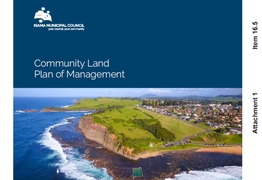
Kiama Council’s public access meeting on Monday was a packed session with speakers advocating for action on ageing sports infrastructure, heritage recognition, cycling safety and surf club governance.For information on Kiama Council's May 20 Ordinary Meeting, click here and to view the livestream from 5pm, click here.Sporting precinct masterplan finally on the tableRepresentatives of the Kiama District Sports Association – Complex Users Working Group welcomed the draft masterplan for the Kiama Sports Complex and South Werri Reserve.They urged Council to endorse it for public exhibition and extend the consultation period to 56 days.Download the report hereJohn Dawson, Craig Scott and Ryan McBride detailed long-standing issues including poor drainage, failing lights, lack of inclusive changerooms and dangerous netball courts.The complex serves more than 4000 players and supports multiple sports and school carnivals.Users also raised concerns about limited consultation to date and confusion over the inclusion of the Kiama Leisure Centre in current plans.Land classification concernsSpeakers addressed the draft Community Land Plan of Management.John Greer questioned the classification of a block in Kiama Heights, citing documentation from 2002 showing it was community land.He urged Council to pause endorsement until the land’s status could be confirmed.Download the report hereCycleway suspension challengedRos Neilsen of the Jamberoo Valley Ratepayers and Residents Association expressed disappointment over a staff recommendation to suspend the Jamberoo to Kiama cycleway project and return unspent grant funds.She proposed a fourth resolution point be added to initiate community consultation and publicly exhibit the “shelf-ready” design.Neilsen questioned whether the original route remained viable given current land use, flooding and access challenges.“We’ve waited 20 years – let’s not shelve this without speaking to those most affected,” she said.Download the report hereSurf club debate reveals path forwardDiscussion around item 20.1, a notice of motion concerning the future of surf club land, revealed clear differences – but also room for common ground.Former Mayor Sandra McCarthy opposed the proposed reclassification of Gerringong Surf Club land from community to operational, arguing it was unnecessary, could set a dangerous precedent and failed to honour the collaborative spirit underpinning decades of volunteer effort.Steve Pearce, CEO of Surf Life Saving NSW, emphasised that surf clubs must be able to operate sustainably and manage their facilities in partnership with Council.While he spoke under the item’s listing, his remarks aligned more with a brokered governance solution than a wholesale endorsement of reclassification.He offered Surf Life Saving NSW’s support to help resolve tensions and ensure the club could function as a community hub without undermining community land protections.See item 20 Notices of Motions here

Could a working group have saved the Jamberoo cycleway?

19 May 2025, 6:00 AM

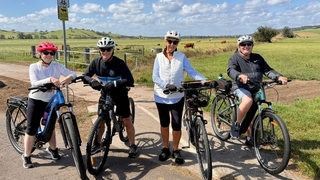
The Jamberoo Cycleway may soon be shelved.Not because it lacks funding. Not because the community does not want it.But because the right people were not in the room early enough to solve a predictable problem.At its 20 May meeting, Kiama Council will consider a staff recommendation to return $2.4 million in grant funding from Transport for NSW.Council staff have advised that the cycleway project, even in its scaled-back form, cannot be delivered by the funding deadline of 30 June 2026.Their concerns are valid. The project involves land acquisition, community consultation, design approvals, utility relocation and public procurement.Staff estimate it would take at least 15 to 18 months after all approvals are in place before construction could be completed.The deadline is not expected to be achievable.But a critical factor has received little attention. The developer of Golden Valley is currently preparing plans for a new sewer main running from Jamberoo to Jerrara Rd.The sewer line will run along the northern side of the road - the same alignment as the proposed cycleway.Sydney Water is expected to sign off on the sewer works later this year, with construction taking place into mid-2026.That timing makes it physically impossible to start building the cycleway along that route until the sewer is in the ground.In other words, even if every other condition had been met, construction could not have begun until the developer’s pipeline was complete.This unavoidable conflict could also have given Council a valid basis to request an extension of the grant timeline, supported by clear evidence that the delay is beyond its control.This kind of dependency should not come as a surprise. But there is no indication that it was considered as part of Council’s initial negotiations with Transport for NSW or factored into its delivery estimates.This is where a working group could have made the difference. A project of this complexity, involving Council, state funding agencies, utility providers, private developers and the community, cannot be managed in isolation.It requires shared timelines, early warnings and open channels between those doing the digging, the planning and the funding.Had this kind of group been established earlier, Council could have used the sewer conflict to justify a formal request for an adjusted timeline.With design work already complete, and strong community support, the case for a reasonable extension may have been compelling.Now, the project is at risk of being withdrawn entirely.Council staff have recommended returning the funds, recovering design costs, and waiting for a future grant opportunity.That may be fiscally cautious, but it will be a disappointment to residents who have long supported the project and assumed its delivery was a matter of when, not if.There may still be a way forward. If Council engages quickly with Transport for NSW, armed with clear information about the sewer installation timeline, there may be grounds for a further extension. But that will require urgency, collaboration and leadership.The bigger lesson is simple. Working groups are not just talkfests. When formed early and structured properly, they can prevent costly delays, align parallel infrastructure, and unlock funding that might otherwise be lost.If Kiama is serious about delivering complex projects in constrained times, it needs more than plans on paper. It needs all the players at the table, from the beginning.

  Families face long wait as Jamberoo preschool site stalls in Council process
 Families face long wait as Jamberoo preschool site stalls in Council process

18 May 2025, 8:00 PM

When Deputy Mayor Melissa Matters called out the State and Federal Governments for failing Jamberoo families, the director of Jamberoo Community Preschool, Belinda Hibbert, felt seen.“The Jamberoo community just comes together to support us so much,” she said.“And now it feels like the support is even broader. It’s clear this preschool means a lot to a lot of people.”Jamberoo Community Preschool is part of Kiama Preschool Incorporated, which has been educating local children for more than 50 years.Generations of families have come through its doors, and now many are returning as parents.But demand has never been higher. There are around 150 children on the waitlist in Jamberoo alone.In Kiama, the list is even longer. Belinda estimates there are more than 300 names waiting for a place.“A lot of families want to come to community preschools,” she said. “We are not for profit, we have higher staff-to-child ratios, and we are truly part of our local community. People know us. They see us walking up the street.”Jamberoo Preschool legally requires three educators each day but currently employs six. That means more time for relationship building and school readiness, which Belinda believes is central to their success.The preschool has been actively searching for a new site after years of operating on a known floodplain.A breakthrough came when local developer Fountaindale Group offered to donate a parcel of land in their proposed Golden Valley Stage 2 subdivision.But with that development proposal still to be formally assessed and approved, the offer remains just that, an offer.Jennifer Macquarie, a representative of Fountaindale Group, said Council has the ability to fast-track the rezoning process if it chooses.“Once Kiama Council’s housing strategy is adopted we will immediately start to prepare and lodge a rezoning application over the land, and then it will be up to Council and State Government how quickly the assessment progresses.”She is also calling for a working group to be established between Council, the preschool and the developer to prevent the project from stalling.“What is missing is a coordinated plan and a clear timeline,” she said.Many grant programs require a matched in-kind contribution. The donated land could meet this condition, but only if its value is formally recognised and documented.Belinda welcomed the strong advocacy from Cr Matters and said she hopes the preschool’s inclusion in Council’s Delivery and Operational Plan will spark more than just talk.“This is not just about buildings,” she said. “It’s about giving families the start they deserve, close to home and connected to their community.”

Council insights on air thanks to Bernie

17 May 2025, 6:00 AM

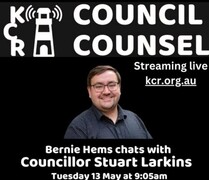
It’s hard to overstate how grateful the community can be to have Council Counsel, a regular segment hosted by Bernie Hems on Kiama Community Radio (KCR).These open and informative interviews keep the community up to date on key council matters and give councillors the chance to speak directly to residents about what’s happening in our LGA.In her Tuesday conversation with Cr Stuart Larkins, listeners heard about:Cr Larkins’ participation in the Regional and Rural Local Government Summit, including a conversation with the Mayor of Wingecarribee about shared management of Jamberoo Mountain Road and local bushwalking tracks.Minister Ron Hoenig’s comments on the possibility of expanding rate categories, including changes to short-term rental classifications.Minister Rose Jackson’s feedback on Kiama’s water infrastructure needs and the role of Sydney Water, highlighting the fact that unlike most regional councils, Kiama does not manage its own system.The ongoing debate about whether developments like Springside Hill can be adequately serviced by existing infrastructure.Upcoming road closures on Minnamurra Street (19 May), Gipps Street (19 to 20 May), and Manning Street (21 to 25 May).National Road Safety Week reminders and the importance of road user awareness.A reminder that the Volunteer Expo returns to Kiama Farmers Market on 21 May, with more than 30 local groups attending.Reflections ahead of National Sorry Day (26 May) and Reconciliation Week, including Cr Larkins’ personal connection to the Stolen Generations and an open discussion about cultural healing.A call to better protect Indigenous heritage sites, which Bernie has committed to following up in a future program.Progress on masterplans for South Werri and Kiama Sports Complex, funded by the federal government. See 20 May Council Meeting Agenda Item 16.3 here Long-awaited upgrades to the Kiama Sports Complex, with multiple concept options to be considered before Council moves to the next stage.Broader precinct planning for the Leisure Centre, emergency services, and the Havilah Place site.Council’s resolution to demolish Havilah Place, with a subdivision report still pending to guide the site’s future use.Listen to the podcast here To hear more from Council Counsel, tune in at KCR.org.au or on the KCR app. Thank you to Bernie for making sure our community stays informed.

Kiama Council May 20 Ordinary Meeting – information and links

17 May 2025, 4:00 AM

The Bugle thanks Howard R Jones for this summary of the 20 May Council Business PapersMay 2025 COUNCIL MEETING INFORMATION – Tuesday 20th May at 5 pmThe full Agenda, Business papers and Enclosures for the May 2025 Council meeting can be downloaded here.The Supplementary Agenda can be found here The Table of Contents of the may 2025 Council Business Paper can be downloaded here.Items of interest from the Business Paper are listed below with the item available for seperate download in each case. Some smaller items have been left out. Refer to the Table of Contents and the full business paper if needed.Item 6 – Minutes of previous meetings include the minutes of April Ordinary meeting. Download them here.Item 12 Minutes of Advisory Committees. These are the Finance Advisory Committee Minutes from 6th February and 3rd April. Down load them here.Item 13 Report of the CEO. Includes:13.1 public exhibition of the Draft Fraud and Corruption Control Policy and Statement of Business Ethics and 13.2 Quarterly update of current legal matters as at 31st march 2025 Download them here.Item 14 Report of the COO. Includes:14.1 Acknowledgement of the Bluehaven Advisory Committee. 14.2 Quarterly Budget review and March Financial Statement, 14.3 Statement of investments for April 2025 and 14.4 Statement of Borrowings. Download the report here.Item 15 Reports from the Director of Planning, Environment and Communities.15.1 Community Facilities – current status and future directions It can be downloaded here.15.3 Determination of DA 10.2025.16.1 6 Terracing Street Kiama. It can be downloaded here.15.4 Quarterly compliance report and 15.5. Quarterly Planning and Development report. They can be downloaded here.15.6 Round 2 of the Community Grants and Donations Program. It can be downloaded here.Item 16 Report of Director Infrastructure and Liveability. Includes:16.1 public exhibition of Draft Lease and Licence Policy, 16.2 public exhibition of Draft Property and Asset Recycling Strategy and 16.3 public exhibition of Draft Kiama Sports Complex and South Werri Reserve Masterplans.. Download these reports here.16.5 Post exhibition endorsement of the Community Land Plan of Management. Download full report and final POM here.16.6 Suspension of the Jamberoo Cycleway Project. Download report here.16.7 Traffic Management Traffic committee report. Download here.Item 17 Reports for Information. There are 9 reports for Information:17.1 – Rural and Regional Summit conference, Councillor report,17.2 – Domestic Waste Management future service review, 17.3 – Local Housing Strategy update on exhibition and timeline for finalisation, 17.4 – Questions with notice register, 17.5 – Youth Week 2025, 17.6 Council resolutions register first quarter, 17.7 – Forecast and Actual cash receipts from sale of assets 2023 – 27, 17.8 – State of the assets register including Gerringong Surf Club and all Council held assets, 17.9 – Jamberoo Pool fees. Download the reports here.Item 19 Questions with Notice. Includes answers to:19.1 DAs called in to be dealt with by the whole Council, 19.2 Peace Park matters, 19.3 Roundabout at Spring Creek Drive and Jamberoo Road and 19.4 Section 7.11 and 7.12 fees and charges. Download the report here.Item 20 Notices of Motion. Includes: 20.1 from Clr Brown regarding Local Surf Clubs, including Gerringong and including a request for reclassification of the Surf Clubs lands, 20.2 from Clr Cains regarding Kiama Harbour and Kiama Showground Management Plans and 20.3 from Cle Draisma regarding the Drug Court NSW. Download the report here.Item 22 Confidential reports. Includes: 22.1 Bluehaven Update for April,22.2 Catalyst sites update, 22.3 Gerringong Surf Life Saving Club and 22.4 Service reviews update. Download the report here.

Coastal Walk proves we can build for people, not just cars

14 May 2025, 11:00 PM

On a sunny afternoon, Kiama’s Coastal Walk feels like a vision of how things should be.Locals and visitors stroll, joggers nod hello, and dogs pad happily beside their humans. The views are stunning, the signage clear, and the sense of belonging unmistakable.While the track is not designed for prams, wheelchairs or walking aids, it still offers a glimpse of what good public spaces can feel like when they are thoughtfully planned and loved.But take a few steps inland and the contrast sharpens. Footpaths disappear. Roads become barriers.Getting to places like Kiama Fire and Rescue, our playing fields, or even the local schools can feel like a high-stakes game of dodge the traffic.That is why walkability matters. It is not about scenic tracks. It is about how we move, how we live, and who gets to feel safe doing it.And it is our community who know this best.One parent recently stepped up as a human stop sign to help children cross Jamberoo Road near the sports fields. Locals walking with frames have mapped the cracked paths they avoid. Young people without cars know which streets are too risky to use.Some elderly residents say they do not walk at all, not because they cannot, but because they are afraid of falling.A clear example is the crossing at Belinda Street and Rowlins Road in Gerringong, near the school and aged-care village.Despite community petitions, expert input, and a strong advocacy campaign led by the school P&C and local engineer Lewis Browne, the crossing remains confusing and poorly prioritised.What should be a simple safety upgrade has been delayed by bureaucracy, design standards and funding barriers.In the meantime, older residents are discouraged from staying active and children are left navigating uncertainty during school drop-off.As Browne said, compliance does not always mean safety. These lived experiences are a form of expertise.As Kiama grows and planning decisions are made, the people who live here must help shape what comes next.We do not need every walking path to suit every person. But our streets, our neighbourhoods, and our daily destinations absolutely should.Because our coastal walk proves we can get it right when we listen, when we plan for people, and when we put walkability at the heart of a truly liveable place.

 Who really owns Kiama’s community buildings
Who really owns Kiama’s community buildings

04 May 2025, 11:00 PM

Passions are running high, but beneath the noise sits a bigger question.Who really owns the buildings funded by our rates and taxes? And how do we protect essential services in tough financial times?Recent events have sparked a wave of petitions and social media campaigns, suggesting that Kiama Municipal Council is blocking vital volunteer services.In reality, Council is standing by a simple principle: community-owned buildings must serve the whole community.This is not about stopping volunteers. Council is working to open up access, ensure transparency, and manage every community facility responsibly.It is about ensuring the public assets we all fund deliver the maximum benefit for everyone, not just a privileged few.Acting Mayor Melissa Matters said she stood by her election commitment to be both community minded and business focused.“At the November Council meeting, I asked for information on every Council-owned asset, including every building and every parcel of land, to understand exactly what they provide for the community and what they return to Council," she said."This work is about making sure our assets are activated, accessible, and delivering the best possible outcomes for the whole community."That includes improving access, including ambulant and accessible bathroom facilities, financial sustainability, and broader community use."We need to make sure every community asset is working for everyone, not just a few.”Some groups are fortunate to have access to state-of-the-art facilities and built-in fundraising opportunities.Meanwhile, other frontline volunteers, like our rural firefighters, continue their critical work out of modest garages, without cafés, function rooms or private bars to help raise money for their essential services.Councillor Erica Warren said Council must take a responsible approach to community assets.“Given the financial constraints Council faces, it is imperative that we manage community facilities in a way that increases income that can be further spent on the community," she said."What is the alternative? That rates go up? We need to be smarter with what we have.”We must not lose sight of the bigger picture. Every public building must be a living, working part of our community.Council is not taking anything away. It is trying to create opportunities for broader use, fairness, and sustainability.Strong communities are built when everyone has a seat at the table, not when public spaces become private clubs. Protecting our facilities means protecting our future.

A bold vision of innovation for Kiama’s housing future

04 May 2025, 8:00 AM

She didn’t get to show her slides on the night, but if you asked Jacqui Forst what Kiama should be doing differently, she’d answer with one word: partnerships.At last week’s housing forum, Jacqui - a social worker and service innovator with experience across NSW Health, aged care and the not-for-profit sector - proposed something bold to flip Kiama’s housing narrative from stuck to strategic.Her slide deck, titled “Innovate Kiama”, points to global and local models that are already delivering housing solutions with social, environmental and economic impact.Among them:Nightingale Housing, a not-for-profit group delivering architect-designed, low-energy apartments for low to middle-income residents, underpinned by values of affordability, transparency and community.Havilah Place, right here in Kiama, was named as a potential Nightingale-style demonstration site.International examples like Birmingham Dreaming City, Dark Matter Labs, and Glasgow’s Our Town initiative, all of which use strategic partnerships to drive regeneration and social infrastructure.Jacqui’s key proposal was to activate Draft Housing Strategy V2 Recommendation 26 of the Draft Housing Strategy, the final action line most readers skipped over, and turn it into something real.She wants KIama Council to help convene a housing reference group of local residents, funders, venture capitalists, urban futurists and strategic risk holders such as insurers and superannuation funds.The goal? To co-design and support a portfolio of real world, system-led demonstrations that tackle the housing crisis through local innovation.She also proposed a Kiama Hackathon, where residents, planners, architects and builders could prototype new ideas and break through regulatory constraints together.“This doesn’t have to be a pipe dream,” Jacqui said. “We’ve got the land, the knowledge and the urgency. What we need now is structure, trust and investment.”

 Is Kiama Council walking its talk on Minnamurra River protection?
Is Kiama Council walking its talk on Minnamurra River protection?

03 May 2025, 8:00 PM

Opinion A motion to protect the Minnamurra River is testing whether Kiama Municipal Council’s governance reforms have real bite, or just better branding. At first glance, the Strategic Finance and Governance Improvement Plan (SFGIP), adopted in response to a state-imposed Performance Improvement Order, is full of promises, better systems, improved accountability and streamlined decision-making.It is the kind of plan that comes with charts, timelines, and a digital dashboard called Pulse. But at the last Council meeting, the real test of those reforms came from outside the official agenda, through a public access presentation by Minnamurra Progress Association spokesperson Jacqui Forst. Speaking in support of Councillor Melinda Lawton’s motion to undertake a full environmental assessment before a possible relocation of the Council depot near the Minnamurra River, Forst offered more than advocacy.She offered a mirror, asking whether a Council promising high governance standards can justify self-assessment under outdated legislation. CEO Jane Stroud's written response to Cr Lawton’s motion confirmed that a self-assessment under Part 5 of the Environmental Planning and Assessment Act 1979 would be carried out and stressed that the project was already being managed within Council’s new internal framework, the very one established by the SFGIP.In other words, trust the process. But Forst gently challenged that trust, pointing out that 1979-era assumptions about rivers as “dumping sites” no longer meet modern community standards or expectations.Her call includes quadruple bottom line reporting, economic, environmental, social, and cultural costs, in the assessment process, and collaborating with Shellharbour Council to create a joint strategy for the catchment. This is not the first time the CEO’s approach to transparency has raised concerns.In her Item 13.1 progress update on the Performance Improvement Order (PIO), Stroud noted the governance plan was “operational in nature” and therefore did not require community feedback. But this distinction, as the river debate shows, is exactly what troubles residents - decisions made under the banner of “operations” still affect public land, natural resources, and community amenities.Whether it is selling aged-care facilities or moving a depot near a fragile river ecosystem, these decisions are lived, not abstract. Tellingly, the PIO progress report flags a quiet risk, that councillors might “make new commitments beyond capacity.”In plain terms, it is a warning against councillors overstepping.But it also raises a deeper issue - are elected representatives being empowered to lead, or managed into silence under the guise of reform?Cr Lawton’s motion, and Forst’s evidence-backed support, suggest that community leaders are still trying to ensure environmental integrity is not sidelined by financial convenience.The test is not whether the system can absorb such motions. It is whether it can act on them. Just months after finalising the Blue Haven Bonaira sale and launching a new digital governance tool, Council is now facing a different kind of audit, not by the Office of Local Government, but by residents who are asking what does improvement actually look like? As Jacqui Forst put it, “Safe and inclusive discussions are essential in this time of change.” So is listening.

Acting Mayor demands action on Jamberoo pre-school and road safety

03 May 2025, 3:00 AM

Kiama’s Acting Mayor, Cr Melissa Matters, says it is time for the State and Federal Governments to stop turning their backs on regional communities like Jamberoo.From early childhood education to critical transport links, Cr Matters says Kiama Municipal Council is being forced to carry the load while higher levels of government remain silent.“Kiama is a childcare desert,” she said.“Families are stuck on waitlists for months. In Jamberoo, our community pre-school is on a floodplain, one heavy rain away from being unusable, and we still have no funding commitment for a safe, modern facility.”The need for a new Jamberoo Community Preschool is now listed as a top priority in Kiama Council’s Draft Delivery and Operational Plan.Cr Matters is encouraging residents to make a submission and show their support during the public exhibition period.“This is more than just education,” she said. “It is about safety, equality and whether young families in our region are given a fair go.”Another pressing concern is Jamberoo Mountain Road, a vital route for locals, tourists and emergency services, which will again be closed for major repairs in May.Council will carry out the work, but under disaster funding rules, the repairs must follow outdated standards.“We are doing the heavy lifting, rebuilding a road from the 1800s, but the funding rules stop us from building it to modern safety standards,” Cr Matters said. “That is not just frustrating. It is dangerous.”Kiama Council is calling on the NSW Government to assume responsibility for Jamberoo Mountain Road and for both levels of government to fund a long-term solution before another landslip or tragedy occurs.“We are not asking for handouts,” Cr Matters said. “We are asking for common sense and a fair go. Until we get it, Council will keep fighting.”

 Community warns Kiama’s housing plan ignores basic infrastructure
Community warns Kiama’s housing plan ignores basic infrastructure

29 April 2025, 6:00 AM

You could feel the frustration in the room, not anger for anger’s sake, but a deep weariness that came from years of seeing housing decisions made without listening to the people who live here.At last week’s housing forum at Kiama Leagues Club, the panel had spoken.Then it was the community’s turn. What followed was part town hall, part truth-telling session.So what would actually fix the housing strategy?When the question was put to the panel they didn’t hold back.Former urban planner Tony Gilmour suggested two quick changes: add affordable housing to the list of strategy priorities and make it crystal clear that in-fill and brownfield development are preferred over sprawl on greenfield sites."That’s planning 101," he said. "And we’re not even doing that."Housing Trust CEO Michelle Adair called for data with a pulse.“We need to know who’s going to live here,” she said. “How old are they, what are they earning, are they raising kids, are they care workers or casuals, or retirees?”Without this, she argued, the strategy is planning for a place that may not even exist. She also called for an action plan with actual action, not vague “we’ll review this in two years” clauses.Architect Madeleine Scarfe demanded targets. Social housing in the Kiama LGA sits at just 0.6 per cent - well below the state average of 4.2 per cent.She also called for an increase to at least 5 per cent and for limits on short-term rentals. "Targets matter," she said. "Even if they’re modest, we need to know where we’re headed."She also urged Kiama Council to take out Spring Hill and Riversdale Road from the strategy until demand justified it. “We don’t need them now,” she said. “Let’s not waste land just to hit numbers we don’t believe in.”Bronwyn Siden, a retired town planner, spoke plainly. “You can’t achieve affordable housing in greenfield sites,” she said. “The infrastructure costs alone make it unviable.”She called the current strategy a step forward, but one still fundamentally flawed.Her message was clear: Council needs help. Volunteers, experts and locals must work together if the vision is to be realised.Neville Fredericks, a developer and former Mayor backed her up. The real problem, he said, isn’t bad intentions, it’s bad regulation. “The system is designed to produce sprawl,” he said. “If you want compact, walkable, diverse housing, you have to change the rulebook.”And then came the big red flag - infrastructure. Or rather, the lack of it. One long-time resident asked how 900 new homes could be approved without accounting for the waste they would produce.He had done the maths: four people per home equals 720,000 litres of sewage from 900 homes per day. Has Sydney Water even been consulted?No one could say. The silence was damning. “We’re already short on sewer and space,” he said. “We can’t keep piling people in and pretend it will sort itself out.”Alan Woodward brought the cautionary tale. He spoke of Ligurano, a coastal town in Italy that once thrived.Now it’s a ghost town half the year. Holiday rentals replaced families, schools shut down, and trains stopped running. “Could Kiama become the next Ligurano?” he asked. The room fell quiet.And still, practical ideas kept coming. Bernadette Black, a South Precinct resident, described streets overwhelmed by short-term rentals - not a family getaway, but party houses for 18 guests with no development approval.An environmental advocate warned that Spring Creek, Kiama’s last remaining coastal freshwater wetland, was under threat from proposed housing development.A small local developer and builder stood up and told the story from the other side. “We want to build affordable homes,” he said, “but the system is stacked against us.”He listed every layer of cost: stamp duty, capital gains tax, GST, land tax, holding costs and the endless risk of going to the Land and Environment Court. “We’re not the enemy,” he said. “We’re part of the solution, if we’re allowed to be.”And yet, the room wasn’t cynical. It was clear-eyed. Create a citizen jury. Attract real innovation. Invite funders, insurers and housing organisations to collaborate with local knowledge.“The innovation won’t come from Council,” said panel member Jacqueline Forst. “But it can come from us.”In the final moments, 21-year-old Jordan Casson-Jones took the mic again. “If teachers and nurses and firefighters can’t live here, then this won’t be a community anymore,” he said. “It’ll just be a place.”


 Learn how to take action on Council matters
Learn how to take action on Council matters

27 April 2025, 8:00 AM

At The Bugle, we believe good local democracy starts with people feeling heard, valued and respected.Whether it's a footpath that goes nowhere, a crossing that makes your heart race, or a flashy new building that forgot to include truly accessible toilets, if something in your community isn’t working, you shouldn’t be left shouting into the void.And yet, that’s how it often feels.Maybe you’ve had a proper vent with the neighbours.Someone’s posted a frustrated comment in the local Facebook group.And now you’re wondering, what next? How do you actually get Kiama Council to listen?Believe it or not, there is a way forward.It’s not always fast, and it doesn’t come with fireworks.But with persistence, respect and a bit of strategy, it can work.Here’s how to turn frustration into action.1. Start with a councillorFind a councillor who might understand your concern. Give them a call or send a short, respectful email explaining what the issue is, why it matters, and what you’d like to see happen.Even better, invite them to come and see it.Councillors are far more likely to act when they’ve visited the surf club that just received a $5 million makeover, only to find the so-called “ambulant” toilet can’t actually be accessed by anyone using a mobility device.Or when they’ve had to cross Belinda Street, Gerringong, and found themselves in a game of chance with passing traffic.Grounding the issue in lived experience helps cut through.2. Speak at a public forumCouncil holds a public forum the Monday before each council meeting. If your issue lines up with an item on the agenda, you can register to speak.You’ll get five minutes. No grandstanding. No theatrics. Just a clear, calm opportunity to share your perspective. And yes, councillors do listen. Some even go back and rewatch the recording.3. Ask for a Notice of MotionThis is one of the most powerful tools councillors have. A Notice of Motion allows them to formally put an issue on the agenda for discussion and decision.You can’t submit one yourself, but you can ask a councillor to raise it on your behalf. If it’s supported, Council staff must follow up with a report or action.This is how change happens, whether it's about green waste services for local businesses, better planning for accessible infrastructure, or policies that actually reflect lived community needs.4. Build community backingIf the issue affects others, don’t go it alone. Talk to your local P&C, community advocacy group, surf club or sports group. Share your concerns and invite others to join the conversation.A lone voice might be dismissed as a squeaky wheel. A community chorus is much harder to ignore.5. Shine a lightStill hitting a wall?There’s power in visibility.Write a letter to the editor. Call in to local radio. Raise your issue respectfully on social media, or get in touch with The Bugle.Public pressure isn’t about stirring up outrage. It’s about shining a spotlight, building understanding and making sure those in power are paying attention.What to avoid• Don’t attack Council staff. They implement policy. They don’t make it.• Don’t send a novel. Keep emails short and focused.• Don’t wait until the ribbon-cutting. Raise concerns early when there’s still a chance to influence outcomes.Because local voices matterThe Bugle is committed to a stronger, fairer Kiama.We know that when people feel confident to speak up, when they know where to go, who to ask, and how the system works, they’re more likely to take part in shaping their community’s future.You don’t need a title, a platform or permission. You just need to care enough to say something.And when you do, we’re here to back you.

Council responds to community concerns over housing strategy vision

25 April 2025, 3:00 AM

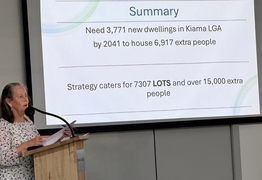
When Karen Fowler asked “Is this housing strategy right for Kiama?” In her recent opinion piece for The Bugle, she gave voice to what many in the community have been wondering.Is the Draft Local Housing Strategy guiding us toward a future we recognise, or one we might regret?She raised concerns about whether the Strategy matches our actual growth needs, reflects the community’s values and ensures that infrastructure keeps pace.At a recent Kiama Business Network forum, Ed Paterson, Kiama Council’s Director of Planning, responded to those concerns.Outdated population figures?Karen noted the Strategy uses 2022 population projections that predicted 6917 new residents by 2041.But 2024 data slashes that figure to just 2180.Ed acknowledged the discrepancy and said the newer figures will be reviewed as part of the Strategy’s refinement. “Projections change all the time,” he said, citing migration and policy shifts. “We’ll be checking our work against the latest data.”Too much housing?Karen also questioned why Council was planning so many homes if population growth is expected to slow.Ed explained that the Strategy is a long-term vision, stretching 40 to 50 years ahead, not a short-term construction program.Rezoning and infrastructure take time, he said, and planning ahead prevents reactive decision-making down the track.Why expand urban boundaries?Even using the older population forecasts, Karen argued the Strategy proposes more homes than needed and questioned the need for four Urban Expansion Areas (UEAs).Ed’s response was Council doesn’t control when landowners or developers act, so identifying greenfield sites early allows for coordinated, sustainable growth rather than speculative, piecemeal proposals.What about infrastructure?Karen welcomed the Strategy’s “non-negotiable principles” and its focus on infrastructure planning. Council says these parts have been significantly strengthened. Sydney Water is now doing network modelling, and a new Structure Plan is being prepared to ensure coordinated delivery of roads, open space, schools, and utilities.Preserving what matters mostKaren called on the community to think about what we value most, our green hills, beaches, and village character, and to ask if the Strategy protects those things.Ed said this feedback has been heard. The revised vision includes environmental protections, respect for First Nations culture, and aims for “housing in the right locations”.Will it deliver affordable housing?While Karen didn’t use the phrase “affordable housing,” she raised real concerns about inclusivity.Ed clarified that Council is exploring planning controls, incentives, and partnerships with community housing providers. But he also pointed out that some aspects of affordability, like regulated housing schemes, are beyond local government’s control.Have your sayCouncil has received more than 100 submissions.Community feedback is open until 27 April, and the final Strategy is expected to go to Council mid-year.As Karen wrote, “This is more than a plan. It is a vision of our future. Let’s make sure it’s one we share.”

Let’s fix Kiama's housing, not just talk about it

25 April 2025, 1:00 AM

Opinion As political leaders tour the nation with housing promises, local communities like ours are left asking: when will anything actually change?In Kiama, housing affordability is not just a distant problem, it is a daily challenge.From Jamberoo to Minnamurra, to Gerroa families are being priced out, workers are forced to commute long distances, and older residents are struggling to downsize without leaving the area they love.So while federal parties pitch superannuation schemes and stamp duty tweaks, the real question is: how do we come together locally to solve what is clearly a cluster problem?Kiama Council's Draft Local Housing Strategy V2 has been through several rounds of consultation and revision.It aims to respond to these complex challenges, but like housing strategies across the country, it risks missing the mark unless it brings the right players to the table.Because this isn’t just about planning rules. It’s about land, labour, lending, legacy infrastructure, and leadership – all pulling in the same direction.A recent article in The Conversation unpacks five key ideas that could shift housing policy in the right direction – and they apply just as much to us here in Kiama:• It’s a cluster problem: Housing affordability is driven by the interaction of many factors – from interest rates and global capital, to planning delays, construction workforce shortages, and poor past policy. No one fix will work in isolation.• We need supply and demand solutions: Both major parties are currently focused on boosting demand, but this risks pushing up prices unless supply is rapidly expanded – something that takes years, not months.• Look to the homes we already have: With new builds adding only 2 percent to housing stock each year, creative use of existing homes – such as enabling granny flats or flexible lot sizes – must be part of the solution.• Target the right people: Many schemes benefit those already close to affording a home. Local and national policy must focus more sharply on people truly locked out of the market.• Think across generations: Housing reform needs to work for young buyers, ageing residents, and renters alike – including bold changes like replacing stamp duty with a land tax.The question for Kiama is how we apply this thinking locally. No single level of government can fix housing alone.Councils control planning, but not tax. States hold infrastructure budgets.The Commonwealth sets financial incentives. Kiama’s strategy must clearly define roles, push for coordinated funding, and embed community voices throughout.Our housing isn’t just about supply or policy. It’s where we live, sleep, raise families and age. Kiama can’t solve the national crisis - but it can model an honest, inclusive, and sustainable response.Listen to • KMC Director of Planning present Draft Housing Strategy V2 at Housing Strategy Business Panel Discussion on 11 April here • Business Panel Discussion here• Housing Expert Dr Tony Gilmour discuss the Draft Housing Strategy V2 with Bernie Hems on KCR here • KMC Director of Plan Ed Paterson discuss the Draft Housing Strategy V2 with Bernie Hems on KCR here Have your sayKiama Council’s draft housing strategy is on public exhibition until April 27.You can read it and share your views here.This article draws on the original piece “Housing affordability in Australia: here are 5 ideas to help fix it” by Amity James and Steven Rowley, published in The Conversation on 11 April 2025.

Kiama’s housing strategy is a ticking time bomb for the community’s future.

24 April 2025, 1:00 AM

At a packed forum at Kiama Leagues Club on Wednesday night, residents lined up to say one thing: Council's housing strategy does not represent us.It doesn’t reflect the reality of life here, and it won’t deliver the future our community needs.Tony Gilmour, retired urban planner, opened with a calm demolition job.Councillor Melinda Lawton convened the forum. The strategy, he said, had been years in the making but still lacks clarity, transparency, or anything resembling strategy.The numbers are outdated. The community input has been ignored. The vision? Missing.He called it wishy-washy. He was being polite.Dr Tony Gilmour and Michelle Adair Michelle Adair, CEO of the Housing Trust, reminded us what happens when workers can’t afford to live here. You lose your GP. You lose teachers. You lose your café staff.You lose your community. If Kiama wants to stay the same, she said, it has to change.Renowned local architect Madeleine Scarfe brought it home.You can’t call something a strategy if you don’t say how you’ll reach your goals.The document lists problems but offers no real solutions.No controls on short-term rentals. No commitment to one- or two-bedroom homes. Just more sprawl.Environmental expert David Pepper warned of a suburban creep from Gerroa to Bombo, with no regard for biodiversity or liveability.Greenfield sites aren’t just paddocks. They are part of an ecological system. Tear that up, and you don’t get it back.Then came Jordan Casson Jones, who is 21 and raised in Kiama.Living in a granny flat with his partner, both working, both studying, still struggling. “If I had children,” he said, “I couldn’t afford to stay here.” How many more young people will Kiama lose?"And finally, Jacqueline Forst lit the match.A strategist, carer and self-confessed forum crasher, she cut straight to the truth. “We cannot fix this by building more houses,” she said. “Tinkering at the margins is over.”Her message? Reject the developer-first model. Build bottom up. Empower locals. Use our brains and land value for something better.She called out the cheap shots. The bureaucrats laughing at Kiama for being NIMBYs.The big city powerbrokers are dismissing local voices, Forst said. And then she turned it.We are not naysayers. We are a region of housing innovators, she said, and it’s time we acted like it.From rock star futurists to real-world renters, the message was clear: we are not passive bystanders to Kiama’s future. We are the blueprint.So, what now?Residents need to make noise by writing submissions, emailing councillors and challenging the corporate spin because if this version of the strategy goes through unchanged, Kiama is at risk of losing more than trees and footpaths but the very soul of its community. The deadline for feedback is Sunday. The stakes are high. Have your say here.

Phillips explains pamphlet gaffe after Council complaint

23 April 2025, 6:00 AM

Member for Gilmore Fiona Phillips has been forced to remove an election pamphlet from circulation after Kiama Municipal Council lodged a formal complaint with the Australian Electoral Commission.A flyer featuring a photo of Phillips and Kiama Mayor Cameron McDonald and dozens of community members at the opening of the new Gerringong Surf Life Saving Club had been produced as part of her re-election campaign for Gilmore in next Saturday’s federal election.Kiama Municipal Council was concerned that the flyer featuring McDonald performing mayoral duties in Phillips’ campaign-related material would be perceived as him endorsing the Labor candidate.Mayor McDonald was elected last October as an independent.“Neither Kiama Municipal Council nor the Mayor authorised the use of this image, and permission was not sought,” according to an official statement from Council. “Despite assurances provided to Council, the election material continues to be circulated.“A formal complaint has been lodged with the Australian Electoral Commission and the candidate informed to cease using or circulating this material.”Phillips responded by saying the flyer is no longer being used in her bid to retain the seat of Gilmore, which is expected to go down to the wire once again after it was the closest race nationwide in the 2022 election.“A flyer containing a photo of a well-attended community event at the opening of the new Gerringong Surf Life Saving Club was distributed locally,” Phillips said.“Kiama Council raised a concern with me about the Mayor being part of that photo on Saturday 19 April. “The flyer was immediately removed from distribution following Council’s request and has not been distributed further.”

Independent Community Forum for locals to decide Kiama’s housing future

22 April 2025, 1:00 AM

If you’ve been left wondering whether your concerns about housing in the Kiama LGA are being heard, there’s another chance to join the conversation.An independent Community Forum will be held this Wednesday (23 April) at Kiama Leagues Club, hosted by Councillor Melinda Lawton.This forum offers a unique opportunity to hear directly from a panel of experts with deep roots in our region and strong views on the Kiama Draft Housing Strategy Version 2.Whether you’re curious, concerned or committed to helping shape a liveable future for our towns and villages, this event invites you to take a seat at the table.Who’s speaking, and why it mattersThe forum follows on from a Kiama Council-hosted breakfast forum at The Sebel earlier this month.While many found that event informative, others left with unanswered questions.This Wednesday’s session provides an alternative space for deeper discussion, reflection and community voice.Confirmed panel members include:Dr Tony Gilmour, retired affordable housing consultant and former Chair of Council’s Infrastructure & Liveability CommitteeMichelle Adair, Managing Director of Housing Trust, with a background in portfolio growth, advocacy and stakeholder engagementJacqueline Forst, social worker and service innovator with experience across NSW Health, aged care and the not-for-profit sectorDavid Pepper, environmental scientist and former builder, who now works in carbon and biodiversity credit marketsMadeleine Scarfe, local architect and community broadcaster at Kiama Community RadioJordan Casson-Jones, youth advocate and Greens candidate, representing a generation whose future depends on today’s decision.Their combined experience spans housing, health, architecture, climate, economics and community development.Be part of the solutionYou’re invited to come along, listen, and participate in a meaningful conversation about what kind of housing future we want — and need — for the Kiama LGA.If you can’t attend in person, consider tuning in to the two-part Kiama Community Radio recording from the earlier Sebel event, available on the KCR website.And if you’ve still got questions — or if the strategy feels more like ticking boxes than telling our community’s story — then this forum is for you.📍 Wednesday 23 April 2025🕕 6:00pm📌 Kiama Leagues Club🎟️ All welcome — free entry, RSVP encouragedFor more info or to book a spot, visit here

21-40 of 83