The Bugle App
The Bugle App
Your local news hub
Latest issueFeaturesSportsVacanciesKCR24 Hour Defibrillator sitesSocial Media
The Bugle App

Blow Your Bugle


Letter to the Editor: Replacing fireworks with a better option

26 August 2025, 12:00 AM

To the Editor,I am writing in relation to the recent discussions that have opened up around Council’s decision to cancel the New Year’s Eve fireworks. This decision seems to have sparked some debate across the community. While it is understandable that some people in our community would be disappointed with the decision, it is equally understandable that Council had to make this tough call given the financial situation Kiama Council has been in over the past few years, a decision that wouldn’t havebeen taken lightly I would suspect.Personally, I am not a fan of the fireworks, not just here but anywhere across the country. As beautiful and entertaining as they are to look at there are a lot of negative impacts to take into consideration. Fireworks release particulate matter, emit gases such as carbon dioxide, carbon monoxide and nitrogen oxide which creates smog, reduces air quality and contributes to climate change. In addition to this, the colourful effects are often created using heavy metals such as barium, strontium and copper and can remain in the air as toxic particles. After fireworks explode the casing, ash and unburned chemicals fall back down to the earth and get into our waterways and oceans, plus the heavy metals can contaminate soil and water, harming aquatic life and ecosystems. Not to mention the poor dogs, other animals and wildlife that are distressed whilst the fireworks are on.Anyway, enough of the negative stuff, how can we as a community turn this decision that may be considered by some as a negative, how can we turn it into a positive.There were several posts that kept popping up on the community pages on social media. Some informative, some people upset and angry about the decision and others in favour of the decision and I had to weigh in on the debate.I suggested perhaps we think about activating other areas instead of down by the harbour (of course, the harbour could be included) and perhaps having smaller street festivals or activating places like Terralong St and Hindmarsh Park. Further to this though, activating other locations outside of central Kiama. Perhaps activating Jones Beach shops, the park in Jamberoo, Gerringong main street, Tingira Crescent shops and the list goes on. Some areas could have street closures, partial street closures or move celebrations into some of the bigger parks as previously mentioned, where street closures aren’t possible.This way the people in our community would have more options of where they might want to see the new year in and maybe not this year but in future years we could have a shuttle service that connects all of the activated areas and people could move from one area to another if they wantedto.As a local hospitality business owner and someone that has worked in the hospitality industry for over 28 years, and at least 15 of those years in venues around the Kiama LGA, I can say without a doubt that the fireworks don’t stimulate the nighttime economy as much as we could with a bit ofstreet activation. Many would argue my point and say that the fireworks do stimulate the nighttime economy, but I can assure you as I have also been down to the fireworks with my own family over the years that this is not the case.People bring their own drinks, snacks and food, they plonk themselves down somewhere quite early in the evening to get a good vantage point and do not leave their vantage point to support local businesses, nor can they probably afford to with the current cost of living crisis, so I do understand.By getting there early they take up valuable car spaces that locals revellers or holiday makers that are not so interested in the fireworks could use to go out for dinner in some of our great bars and restaurants in town. Then there is the traffic chaos and gridlock for up to two hours after the event is over with everyone making a dash for it to see if they can be the first ones out of town. This traffic chaos also impacts other transport services such as our pub and club courtesy bus services, would have impacted taxi services in the past, and would now probably impact Uber services also.Imagine several street or park festivals all going on at once on New Year's Eve where our hospitality venues could spill out onto the streets, where people could buy food and drinks from these local businesses and the party could go on to the sounds of a live band or DJ on the main stage inHindmarsh Park or any of the other locations previously mentioned, and other forms of entertainment and market stalls scattered across the LGA. I think we can work on this as a community project, get business owners on board, get Kiama Council, Destination Kiama and Kiama Business Network on board.I understand funding is the contentious issue but I’m sure if we do this well enough and the main focus is on local businesses then we might be able to attract sponsorship from the businesses and people may be willing to make a small contribution where kids' entry is free. Plus, I’m currently working on a project called HEAR Kiama (hospitality, entertainment, arts and recreation Kiama), a cooperative of the above-mentioned industries working together to enhance and create a vibrant nighttime economy across our LGA. This cooperative could fundraise by running several events in the lead-up to the main event at the end of the year and attract sponsorship to put the main event on. This might be the first official project for HEAR Kiama to embark on. Let’s work on this as a community, and let’s create something great, yes, a little different to what we’re used to, but let’s do something that we’re all going to remember… and you never know if it works he idea may stick for years to come.Yours sincerely,Michael BowdenOwner/ManagerCin Cin Wine Bar

Bugle Banter: It’s time Kiama truly celebrated Orry-Kelly

17 July 2025, 8:00 PM

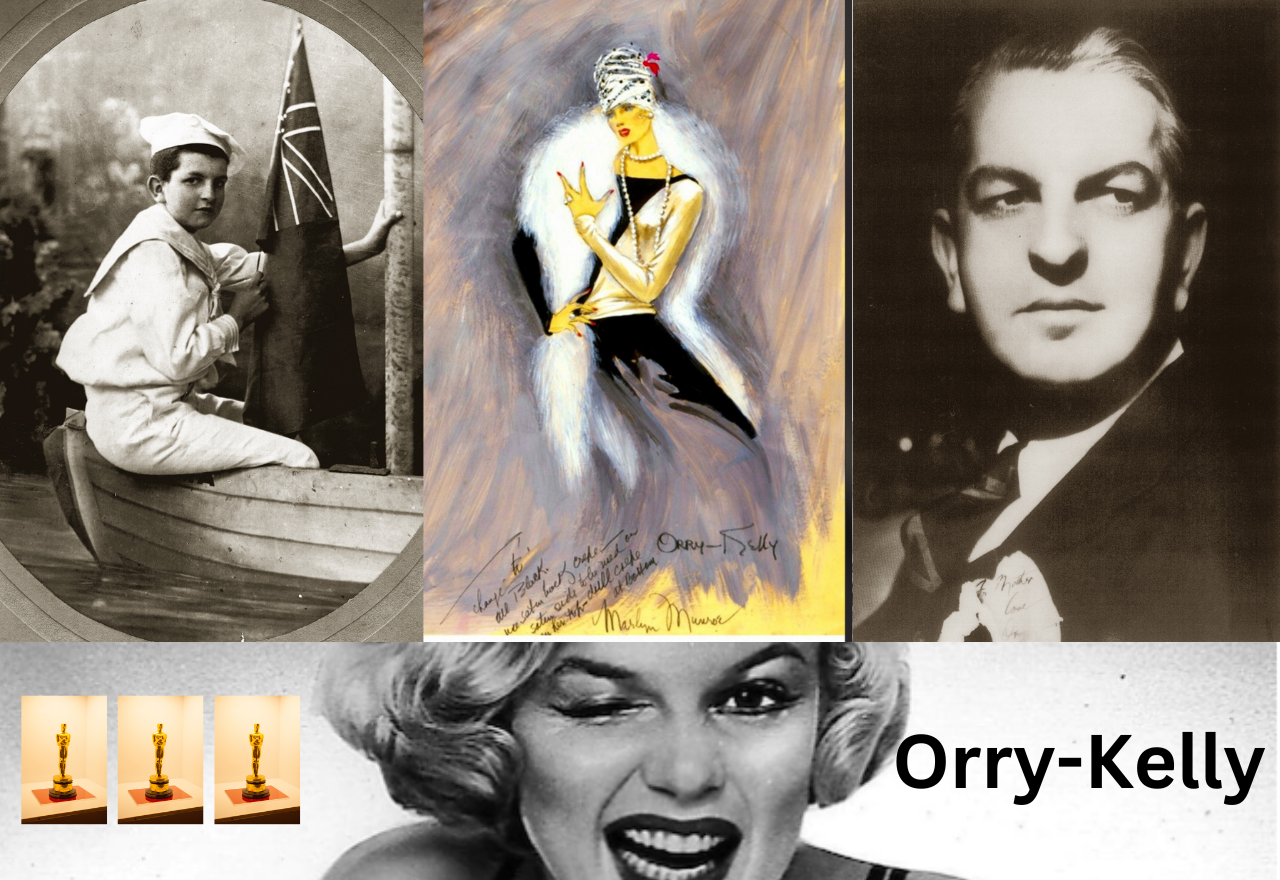
The Orry-Kelly: Dressing Hollywood Gala is fast approaching. On 26 July, Kiama will celebrate a man who, despite his incredible achievements, remains largely forgotten in his home town.Arguably, no other Kiama local has reached the levels of international success that Orry-Kelly achieved.He designed costumes for more than 300 films, including cinematic masterpieces such as Casablanca, The Maltese Falcon, Some Like It Hot, An American in Paris, and Les Girls. He won three Academy Awards for costume design - making him the most Oscar-awarded Australian until Catherine Martin won her fourth in 2013.Orry-Kelly counted legends like Marilyn Monroe, Bette Davis, Katharine Hepburn, and Barbara Stanwyck among his friends. When he died, his pallbearers included Cary Grant, Tony Curtis, Billy Wilder, and George Cukor. His eulogy was delivered by none other than Jack L. Warner.He was also openly gay in Hollywood from the 1930s through to the 1960s - a bold and dangerous truth in that era. He’s even rumoured to have had a romantic relationship with Cary Grant.With a résumé like that, Orry-Kelly deserves to be celebrated as one of Australia’s most remarkable talents.And yet, despite all this, he remains a footnote - overlooked not just by Australia at large, but by Kiama itself.Over the past year, I’ve written numerous articles about him, trying to share his story and ignite some pride. But it still feels like the weight of his achievements isn’t being fully appreciated.Perhaps this story hits home for me because I’m also from the Illawarra and dream of working in the film industry. I understand how difficult that path is - especially coming from a small coastal town.But I also think it points to a broader issue: Australia’s struggle to celebrate its own. Take the Elvis Festival in Parkes - a huge annual event for an American star who never even set foot in Australia. I’m not suggesting that Orry-Kelly is comparable to Elvis Presley, but I will say this: Orry-Kelly was one of our own, and his legacy deserves more.So, I hope Kiama takes notice on 26 July, a date that will also mark the unveiling of Orry-Kelly’s NSW Blue Plaque, part of the state government’s initiative to honour influential historical figures.It will also coincide with the 10th anniversary of Gillian Armstrong’s brilliant documentary Women He’s Undressed, which brought Orry-Kelly’s story to a new generation.If you didn’t get a ticket to the Gala, I encourage you to visit the exhibition at the Assembly Hall in The Sebel. Tickets are just $10, and you’ll see original costumes, artwork, and tributes to a man who quietly helped shape Hollywood history.My hope is that this becomes a lasting tradition for Kiama - to celebrate someone who defied the odds and took our small town all the way to the City of Stars.

Majesty and strength of East Coast Low brings unadulterated beauty

07 July 2025, 8:00 AM

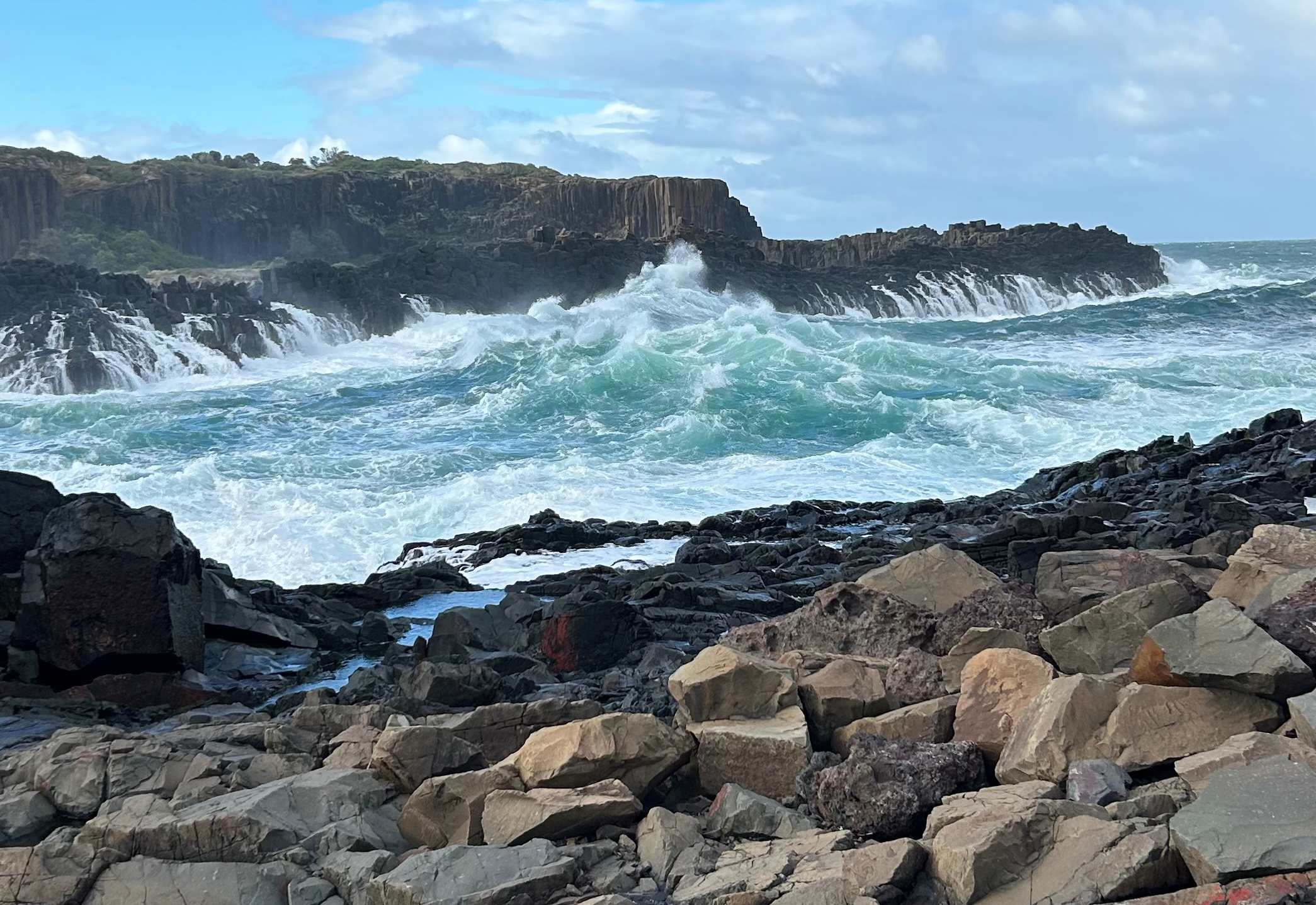
By Carol Goddard To quote Danish author Karen Blixen, best known for her novel Out Of Africa, the cure for anything is saltwater, sweat, tears or the sea.And what a lot of water we see whenever the East Coast Low comes to visit. From the Bombo quarry to Kendall's Beach, the sea puts on a magical watery display.The immense power of the waves, the swirling whiteness of our ocean shows just what Mother Nature is capable of producing.During the week, our seaside tourist town is not notably busy. Rarely are there traffic jams, or conga lines of vehicles.But this all changes when the word gets out. Surf's up. Let's go and look, take a few videos and pics, post them on social media.And so, people are out at every vantage point, to witness quite a spectacular weather event.At the north end of Bombo, waves crash into the headland affectionately known as the toothbrush, (look at the shape and you'll see why), and tower way up into the sky.The beach is ever diminishing, while at the south end, little Spring Creek has now become a river complete with mini rapids.Travel around the headland to Kiama Harbour, where the rockpool is barely visible,and there's surf at Black Beach.There's rarely surf at Black Beach. Until the Low strikes. And then waves push to the walkway, crashing into and over it, leaving very large puddles of water. Great for splashing in.The sea is boiling near the round rockpool, which resembles the suds in a very large washing machine.And saltwater is creeping up the steps and beneath thankfully empty chairs. Surrounding rocks are providing a vantage spot for us awestruck sea lovers.Further on,the Blowhole is working as I've never seen it before.Quite a crowd has gathered to enjoy Kiama's most famous natural feature, and onlookers are keeping their respectful distance, while also getting drenched by the fast moving salt spray.Around the headland to Surf Beach the sea is boiling, sand loss quite evident and on the sea surface there is a film of brown-coloured foam.In an instant,the surf surge is so strong that a huge wave crashes into the wall of the park, close to the surf club, brown foam sent careening into the air, and coming down to land on the heads of some unsuspecting viewers who thought they were high enough to be safe.They scurry further back into the park, unscathed except for getting foamed.That foamy wave continues into the Coronation Park, which is now a seabird filled lake.At the southern end of Surf Beach, the canal resembles a fast flowing river, and the car park is now sand and seaweed covered.There is consternation that the two cars parked there should perhaps be moved before they float away on the tide.The northern end of Kendall's Beach is enormous, the sea breathtaking in its raw energy.Sightseers here are also taking in the vista all the way to our lighthouse. The majesty and the strength of the ocean, the sheer unadulterated beauty of it, on show for us all.Jacques-Yves Cousteau said that the sea, once it casts its spell, holds you one in its net forever.For those of us who are fortunate to witness the ever changing moods, and the mighty power and beauty of the ocean, this is most certainly true.

Between expertise and democracy: Reflections from my time as Mayor

28 May 2025, 1:00 AM

By Neil Reilly, former Mayor of Kiama During my term as Mayor of Kiama from 2021 to 2024, I found myself not only in the centre of civic life but at the heart of a difficult paradox - how to balance the will of the people with the reality of numbers.It’s no exaggeration to say that the town faced an existential financial crisis, largely the result of past decisions made with good intentions but poor foresight.Money, mostly borrowed, had been committed to a second aged care facility - a noble idea rooted in community values.However, it was modelled on cashflows from an older, established facility without accounting for fundamental differences in viability.Worse still, Council funds had not been clearly separated into restricted and unrestricted accounts. It became clear that the business model underpinning the expansion was flawed, and the financial governance even more so.The burden of repair fell to our council, and much of my time as Mayor was devoted to stabilising our finances.This often meant adopting a technocratic lens: placing evidence, financial discipline, and expert advice above short-term political popularity. It worked.The bleeding slowed. But the process raised a deeper question in me: is there a middle ground between technocracy, which saved us, and representative democracy, which got us into trouble?The answer, I believe, lies not in choosing between them, but in bridging them. Technocracy brings rigour and expertise. Democracy brings legitimacy and values.Both are essential, but when unbalanced, either can fail the community. In Kiama’s case, democracy without guardrails led to overreach.But pure technocracy, applied too coldly, risks disconnecting from the very people it seeks to help. So how do we govern wisely?We need democratic institutions that welcome expertise, not resent it. We need technical frameworks - like clear fund restrictions, mandatory risk reviews, and transparent reporting that support political decisions rather than replace them.We need leaders who tell the truth, even when it’s hard, and who respect the electorate enough to trust them with complexity.We also need better ways to involve people, not just through elections every few years, but through deliberative processes that bring citizens into the room before the decision is made.In a crisis, it’s tempting to retreat to technocracy for safety. But in the long run, democracy must prevail - not as sentiment, but as informed, shared responsibility.I’m proud of what we did in Kiama.We pulled the town back from the brink. But I’m also aware that the repair was only the beginning.Now, the challenge is to embed structures that prevent crisis, invite wisdom, and make the practice of democracy as strong as the principles it rests on.

An open letter to the public of Kiama LGA from the local RSL

27 May 2025, 8:00 AM

An Open Letter to the Public of Kiama LGADear Residents,This year, the Anzac Day services in Jamberoo and Kiama were extremely well supported with terrific turnouts at all events. This letter is to publicly thank all those who attended the services and helped keep the flame of remembrance burning brightly.The Kiama-Jamberoo RSL sub-branch is a not-for-profit charitable organisation whose aim is to assist veterans in all manner of welfare and other support, andmaintain camaraderie among veterans who belong to the sub-branch and others in the community. To enable us do this, we rely heavily on donations from the public and this year that was reflected in the generosity of donations collected by the Kiama Lions Club who were present at the Dawn and Mainservices in Kiama on Anzac Day.But the services could not be held with the support of several organisations within the LGA. In particular I would like to thank Kiama Council, Jamberoo Rural Fire Service, Jamberoo Public School, Jamberoo Red Cross, St John Ambulance, Kiama High School, CWA Kiama Evening Branch, Kiama Farmers’Market, Kiama Leagues Club, NSW Police Illawarra Command, Vintage Car Club and Sing Australia. Several individuals must also be mentioned in Fr Roberts from Sts Peter and Paul, Steve Whitworth, bugler Warwick Sporne, piper Paul Wells, soloists Benn Gunn and Michelle Morunga, Adam Vaughan from Kiama Council and Brendon Comber who managed our sound systems.Without this support and the turnout from the people who attend the Anzac Day services, the commemorations would not be the enormously successful events that they are. To you all, a heartfelt thank you.Lest We ForgetRegards,Gary McKay, MC, OAMPresidentKiama-Jamberoo RSL Sub-branch

Kiama JFC kicks goals for girls during Female Football Week

16 May 2025, 6:00 AM

Kiama Junior Football Club joined the nationwide celebration of Female Football Week in style last week with eight of its 12 female teams playing at home on Saturday.Female Football Week is a national initiative that celebrates the growth of women’s football at every level and recognises the vital role women play in developing the game on and off the field.Kiama JFC honoured its 12 all-girl teams, featuring 168 players and more than 60 female coaches, managers and volunteers.“We had eight teams playing at home on the Saturday,” says Kiama JFC’s female football advocate Ben Morgan. “There was a great atmosphere - we had a giant inflatable football jumping castle, a photo booth, giveaways, and face painting in club colours. It felt like a really special day.”Morgan said the club had enjoyed a huge increase in female participation, especially in recent years - a shift he credited in part to the Matildas’ success.“I’ve coached my daughter’s team since they were under-6s - they’re under-10s now,” he says The girls in action at Kiama Sporting Complex on Saturday. Source: Ben Morgan“Five years ago, Football South Coast didn’t offer a girls’ under-7s comp. We had to move up an age group just to play with other girls. That same age group now has around 30 teams. It’s unreal.”Morgan said he wanted to continue building on that momentum by creating inclusive and positive spaces that help girls feel confident and motivated to stay in the sport.“There’s still a big imbalance between boys and girls in football. We need to keep raising awareness and encouraging girls to get involved. Some girls thrive in mixed teams, but others can feel intimidated or go quiet when playing against boys. Having all-girls teams gives them a space to come out of their shell and really enjoy the game.”Importantly, Morgan believes Female Football Week is not only a celebration of players but of all women in football, including referees, coaches, administrators and volunteers.“Last year was the first time we really celebrated Female Football Week in a big way,” he says. “We want to keep building on that. It’s also about recognising the women working behind the scenes - the volunteers, committee members, and coaches - who help make it all possible.”As Kiama JFC continues to champion girls’ football, events like Female Football Week play a vital role in building momentum, boosting visibility, and creating a welcoming environment for the next generation of players. 

Found at sea: Going coastal in Gerringong

08 May 2025, 6:00 AM

By Sally Beerworth I may be the only person who can claim that a chicken nugget has actually improved my health, because it was over lunch at the Werri Beach Fish & Chip Shop that I decided to move to Gerringong.In fairness, I had been contemplating “going coastal” for some years but had yet to find a town that would make interacting with Australia Post’s mail redirection team worth the headache.Living in Sydney meant being in a small (very overpriced) apartment that came with a view of the communal washing line.I had begun finding it increasingly hard to look my neighbour in the eye, knowing he had a penchant for The Incredible Hulk underpants.I also got far less pleasure than the woman upstairs everytime she picked up a bloke from the local pub.So, when I pulled the car off the Princes Highway in early December last year, I stumbled across a town I didn’t want to leave.If I could have, I would have had everything I owned shipped down the coast, there and then.Had it not been for fearing the wrath of my overindulged cat who was waiting at home for me, I would never have returned home to Sydney.I’m quite sure I’m not the only visitor to Gerringong, who has had this reaction, but for me it wasn’t just the view of the headland from the beach, or the artificial colours in my nuggets clouding my judgement.It was that while I was walking along the beach, three people, three complete strangers, had said, ‘hello’ as I walked past them.The only time I recall a stranger talking to me in Sydney, was when I walked down the street one day, wearing half a meat pie on my face.And, I’m fairly confident that the passerby in question was just checking whether or not I was OK not being unaccompanied by a carer.Days later, I rented a house in Gerringong, sight unseen.This is the only way I can explain to people why I was comfortable with the abundance of cream-coloured shag pile carpet in my new abode.Frankly, the poor decisions of the 1970s were, in my eyes, a small price to pay for a house that was only several hundred metres from my purveyor of nuggets.I gently pointed out to the real estate agent that it was indeed an oversight that the house’s close proximity to saturated fats was left out of the property’s marketing.She wasn’t the only participant in the conversation that walked away somewhat concerned.I spent much of our interaction trying to work out why she was inserting ‘Gezza’ into every second sentence.It wasn’t until I walked past the local pizza shop the following week, that I realised that this word, slash throat clearing sound, was the affectionate name given to the town by locals.This nickname is perhaps the only thing I would change about my new home - the air is fresher, the water’s cleaner, the pace is slower and the nuggets are life changing.

 Neville Fredericks:  Planning reform a must to support people-first townships
Neville Fredericks: Planning reform a must to support people-first townships

28 April 2025, 11:00 PM

Opinion By Neville Fredericks, former Mayor of Kiama There is a better way to build. We do not spend our weekends strolling the cul-de-sacs of Campbelltown.We go to Berry or Braidwood.We are drawn to places with a town square, a traditional main street, and footpaths where people say hello.That tells me something. We know what good towns feel like, but somewhere along the line, we stopped building them. I have spent decades thinking about why.The answer lies in the planning codes that shape every street, setback and driveway.These codes still reflect post-war thinking, imported from the United States, where the car industry heavily influenced urban design. That is why so many new suburbs are built around cul-de-sacs and collector roads.They are car-dependent, not people-friendly. Public transport does not work in them. Neither does walkability.We inherited those frameworks, and we are still using them. When I was working on the Tullimbar project in Albion Park, we ran into exactly that problem.We wanted to create a compact, walkable, mixed-use township. But we quickly discovered the regulations would not allow it.So, with Council’s support, we wrote a new set of planning rules.At Tullimbar, we did things differently. Every street had a footpath on both sides.Setbacks were one metre, not five. Every home had a front veranda.If someone was sitting out front and you walked past on the footpath, you were only a few metres apart. You had to say good morning. You built relationships without trying.Some blocks were just 250 square metres. That is perfect for people who are ready to downsize, who are done with lawnmowers and want a home they can manage. But it was still Torrens title, because we had real laneways. Laneways matter. You cannot build good terrace housing without them. But most Council DCPs do not even contain a standard for them.We need to talk about that. Because as we age, more and more of us will want to downsize.Research out of Melbourne shows half of people over 65 would consider a smaller home if it was the right product. But that product is not being built, because our regulations do not permit it.The planning system, in many ways, is fostering worst practice. I cannot say that strongly enough. We need model regulations that allow for traditional towns, designed around walking, neighbourliness and mixed uses.I have spoken with the Department of Planning and the Government Architect.They agree with the need, but they told me that they needed additional skills and resources, and a model in order to lead it.They are waiting for someone else to go first. One place where best practice could happen locally is Bombo Quarry.With enough scale to support 5000 people, it offers a real opportunity to demonstrate what a sustainable, walkable township could look like. But to unlock that kind of thinking, we need inspired and visionary political leadership.The kind of leadership that is not afraid to challenge outdated assumptions or trial something different. The public can help. Advocacy matters. If the community clearly signals that this is what we want, then elected leaders are empowered to act.They can establish the right framework and set up the advisory teams needed to get it right.

Rajasthan not for the faint hearted but well worth the effort

27 April 2025, 10:00 PM

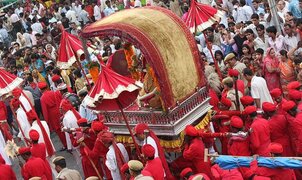
For years, I had dreamt of exploring incredible India, but at this time in my life, the prospect seemed elusive.The reality was that Hubby and I were running a small business, which, in itself, was a daily adventure.We had four children, making it even more challenging. And so the idea of flitting off to India for a few weeks on our own appeared to be out of our grasp.And then it happened.Attending a weekend travel expo in Sydney's Darling Harbour, we found a small Indian travel company, family owned and run, which specialised in designing affordable, individual itineraries to clients' requirements, and we were instantly hooked.Now was our chance - there was a small window of opportunity to have someone babysit our children and our business so we grabbed it.There was only one slight hiccup.It was June, and temperatures in India were sweltering.Visiting India in June is not for the faint-hearted but we were undeterred.Weather, no matter how uncomfortable, was not going to get in the way of our great travel adventure.And so, in mid-June of 2007, we arrived in Mumbai.The culture shock hit us like a brick. Over 12 million people in one city, a seething mass of humanity.It was hot and noisy, and the air was thick with vehicle fumes and blasting car horns. Initially it was an assault on the senses but in relatively little time, we adjusted because it was so utterly different, so vibrant and exciting.Wherever you walked in the streets there were food vendors, sweet tea vendors, snake charmers, richly coloured saris, people sleeping on the pavements, monkeys, and a distinct smell of spice.And we loved it.Over the ensuing two weeks, we travelled around Rajasthan, mainly in an old, breakdown-prone Ambassador, but also by motorboat, plane, elephant and camel.The driver, Mr Shand, was a local tour guide, and I have written about him in an earlier story, A Tale Of Tourguides.He was quite a character. He not only ensured by way of his terrifying driving that we had a hair-raising adventure, but he also spun us tales about various sites we passed by, which more often than not were completely made up on the spur of the moment."Is that a temple Mr Shand?""Oh yes, Miss Carol, that is a temple!"We'd find out later it was a school.He was however, scrupulous on timing, and would find the most crazy way to drive around the odd goat herd or donkey that dared get in his way. Through potholes resembling mini mountain ranges, he forged ahead. Hence, a few hours spent here and there on our journey in various mechanical workshops with no aircon. As I'm writing this memory I'm laughing. The sheer joy of it all, now, as I look back! Wasn't so joyful at the time.Throughout our trip, we ate the most amazing, predominantly vegetarian food - our favourite being the Thali, a platter with small bowls consisting of rice, lentils, curries, pickles, raita and pappadums or roti.We drank, generally warmish, beers and G&Ts. Apparently, refrigeration couldn't quite keep up with the weather. And ice was rare.As we made our way from Mumbai to Udaipur, to Jodhpur, Jaisalmer, Bikaner close to the border with Kashmir, Jaipur, Agra and Delhi, we slept overnight in Maharajah's palaces and merchant's houses, called Havelis, paying a pittance, as we were generally the only occupants; tourists usually don't like temperatures in excess of 50C. One night we had to wait until after 8.30pm to eat our evening meal; staff needed the temperature to drop to 45C before they could prepare our meal. We were the only guests .We visited temples and gardens and forts and tombs and stupas and museums.We saw precious stone jewellers and miniature painters working at their trades, and holy men in the lotus position, praying beside the Mother Ganges, while a funeral pyre sent flames and smoke soaring high above the river.We saw the sun rise above the Taj Mahal, and were astounded by the beauty of this special place. No photograph or video will ever do it justice, it is magnificent.But it was the people we remember most. Young men, university graduates guiding us through palaces and forts, and also talking to us about their family lives and customs; little children in the streets, carrying tiny babies, and begging; gorgeous saris; traders selling all manner of goods, and inviting us to haggle.And we had some fun with these traders.Now I know what you're thinking. Haggling over already cheap prices is horrid. In actual fact, haggling is expected, and Indian traders and shopkeepers are highly talented, play us like fish, and generally come out on top. Or at least with us they did. Every time.Except for the following funny incident.There we were in a vast market which sold silk items, scarves and pashminas. We were very obviously tourists. A young Indian man, who appeared to be the store owner, swaggered over to my husband and started a conversation . He asked if we were Aussies, and when my hubby said yes, he immediately started talking about cricket.This was not a new thing to us. Everywhere we went in India, if we were recognised as being Aussie, the next topic of conversation was cricket. And fortunately we both love the sport.The young man had the gift of the gab and was boasting to us that he was the greatest fast bowler in Rajasthan.He was quite a legend. In his own mind.Without batting an eye, and with a straight face, my hubby retorted that he was, in fact, Ricky Ponting's brother. The young man's posturing almost immediately turned to reverence. We left his shop having purchased many scarves, and leaving him awestruck.On another cricket-related occasion, in fierce late afternoon heat we were set to ride camels in the Sam sand dunes in the midst of the Thar desert. The young boys leading our very frisky camels were far from friendly. In fact, they were totally silent,almost hostile ... until cricket was mentioned. And hubby couldn't resist. He became Ponting's brother for the second time. Well, those boys became as frisky as the camels! And there was nothing they didn't know, stats wise, about any of our current Aussie cricketers. We were instant besties, ah, the power of sport! And the power of being related to an Aussie cricket legend, even if this was not in any way true.Incredible, exotic, amazing India was a two-week sensory experience . We learned, we laughed, we most certainly sweated our way around Rajasthan, and to this day, when I hear the name Ricky Ponting, I smile.By Carol Goddard


Wesley Mission delivers Easter message

16 April 2025, 3:24 AM

It seems like 2025 is both rushing at us and rushing by. Everything seems to be accelerating, the 24/7 news cycle on permanent fast-forward, social media algorithms magnifying a sense of crisis around every corner.Overseas, at breakneck speed President Trump is upending international alliances that have underpinned the fragile geopolitical stability much of the world has enjoyed since 1945. In Ukraine, a miserable war grinds on, while in its rubble-strewn streets, Gaza remains in the grip of a humanitarian crisis.Here at home, the cost-of-living crisis continues to squeeze family budgets to breaking point, all while we continue to come to grips with a housing catastrophe decades in the making and which, truth be told, will take decades to fix. While the rich get richer, many of us are seemingly powerless in an economy that we feel has left us out and left us behind. With a federal election soon upon us, we are being bombarded daily with promises many of us don’t believe.More than a century ago, Vladmir Lenin said that ‘There are decades where nothing happens; and there are weeks where decades happen.’ Given the pace of change washing over us, and the various crises mushrooming around us, it seems 2025 is a year where, to borrow Lenin’s phrase, decades are happening.In these uncertain and anxious times, many of us are feeling overwhelmed. Through 2024 Lifeline recorded 8 of its 10 largest daily call volumes as ordinary Aussies from every demographic and nearly every postcode sought help. Whether we recognize it or not, many of us are grieving – a dream that’s fading, certainties that are disappearing or hope that’s receding.Jesus, the central figure not only of the Easter story but of human history, was described by a prophet as a ‘man of sorrows and acquainted with grief.’ On the night he would be betrayed, arrested and imprisoned, knowing the unimaginable suffering that lay head for him, Jesus told his friends that his soul was ‘overwhelmed with sorrow to the point of death.’In that moment in the Garden, Jesus had a choice. He could have let the cup of suffering he was to drink pass him by. Compelled by perfect and pure love, Jesus willingly walked the loneliest roads of suffering, pain and death. Decades after his death, one of his friends recalled Jesus’ own words, ‘For God so loved the world, that he gave his one and only son that whosoever believes in him shall not perish but will have everlasting life.’Whosoever is you and me – all of us, everywhere and across every time – without exception. God’s love for us is without limit.It was love that compelled Jesus to walk the way of suffering, love that stretched out his hands on the cross and love that forgave his enemies with his dying breath.It was love that saw him lay down his life so that we might enjoy friendship with God. There is no greater love than this.It was love that rolled the away the stone of Jesus’ tomb, revealing not only his empty graveclothes, but that in the end, that love has the first and final word – that when all is said and done, love wins.The story of Easter is the story of God’s love overcoming our failures, our sins, our shame, our guilt, and the power of death itself. God’s perfect love is the power than can overwhelm all our fears.In a world changing at overwhelming speed, when we can feel overwhelmed by uncertainty, anxiety and fear – the Easter truth that love overcomes, that love wins – echoes down two millennia of history and stretches out into eternity, and reaches out for you and for me, embracing us with the assurance that God will never leave us, that there is always hope.This truth invites us into a personal and utterly transformative relationship with God. Freely God is offering you his love, and freely you can receive and be forever changed by it.

Salvos' Easter message

14 April 2025, 2:34 AM

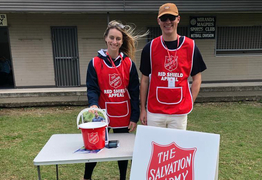
We live in a time where bad news seems to be everywhere. Whether it is international conflicts and politics, a national cost of living crisis or personal devastation, our world seems to sometimes be more focused on the bad as opposed to the good. Indeed, the idea of ‘good news’ often seems like an afterthought; a short segment to wrap up the evening news bulletin, or an attempt at offering a ‘silver lining’ after hearing a story of devastation and loss.However, as we look towards the Easter season, The Salvation Army are preparing to experience and celebrate good news - for us, that good news is found in the Easter story through the death and resurrection of Jesus.When Jesus died on a cross on Good Friday, it was the ultimate bad news for all of those who followed Him. All hope seemed lost, but the story didn’t end there.On Easter Sunday, Jesus rose from the grave into new life. This good news brought with it hope and joy back then, and this good news can offer the same for us today. We believe that through the good news of Jesus, God can take our tragedy and turn it into joy.For The Salvation Army, every day we have people reach out to us who are looking for help. We are seeing new faces come through our doors, those who have never had to reach out to a charity before, who are only just making ends meet.We see how the most simple things like offering a meal, assistance paying bills, a safe bed to sleep in, or a listening ear, can be the ultimate good news for someone. It is that good news that brings people hope.So, as we all face struggles right across the country, whether they are big or small, perhaps a little good news would go a long way.This is why this Easter, regardless of your faith, the Salvos invite you to explore the good news of Jesus with us. To find out more about your local Easter activities through The Salvation Army, visit salvationarmy.org.au.

Is this housing strategy right for Kiama?

12 April 2025, 12:04 AM

Opinion by Karen Fowler The Draft Local Housing Strategy could reshape our towns and villages - but is it heading in the right direction?At a recent Kiama Matters Inc meeting, I asked people to ensure they help shape the future of Kiama by engaging with the Housing Strategy process and providing feedback to our Council and Councillors.The Housing Strategy will define the way our urban environment grows and guide priorities for infrastructure and services.  See Draft Housing Strategy V2 hereThe Strategy will determine what our villages will look like in a decade’s time.The Strategy outlines four key priorities - well-located housing supply, diverse housing options, supporting infrastructure, and thriving centres. While I agree with these priorities, the question I would like people to consider is whether the Strategy actually delivers on them.One concern being raised by the community is that the document relies on outdated population projections. It draws from 2022 data suggesting Kiama will grow by 6917 people by 2041. However, updated 2024 figures project growth of just 2180. We appear to be planning for almost double the expected number.  Even using the older figures, the Strategy seems to propose more housing than needed.The plan identifies an existing capacity to deliver 2341 new homes by 2041, mostly through in-fill development in Kiama and Gerringong. To meet the projected shortfall, Kiama Municipal Council has proposed four Urban Expansion Areas across the Local Government Area. The largest - in Kiama - could accommodate 4200 lots yet we only need to cater for 1028 new dwellings to meet the shortfall. This raises important questions about scale, sustainability, and the ability to keep Kiama liveable. Council argues it needs a pipeline of greenfield land because it cannot control when developers build. While I understand this, the community still needs to consider whether the size of this proposed pipeline is justified.There are positives. I welcome the “non-negotiable principles” in the Strategy and the inclusion of a requirement for a Structure Plan to coordinate planning proposals and infrastructure across the area. The actions in the document around infrastructure planning have also been strengthened.Good strategic land use planning requires consideration of not only economic outcomes. It must also weigh up environmental, social and cultural outcomes. Economic outcomes are easy to measure. Environmental impacts can be assessed by experts. But social and cultural values - our sense of place, our heritage, our access to housing and services – the things that create a healthy and happy community, they are harder to quantify and need to be defined by the people that live here. This is why we need your input. Happy and healthy communities come from people feeling safe, supported, and connected. I keep hearing that our cultural values are embedded in our love of green hills, our beaches, and relaxed outdoor lifestyle. If we want a future that protects these, we must ensure planning decisions are guided by more than population targets and dollars.I urge residents to read the Strategy. Reflect on whether it reflects our community’s needs. This is more than a plan. It is a vision of our future. Let’s make sure it is one we share.Hae your say here

21-40 of 239