The Bugle App
The Bugle App
Your local news hub
The Bugle App
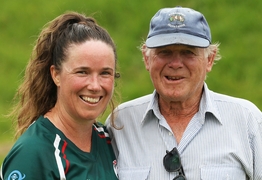
Garry Grey shares his memories of Kiama Sevens

17 February 2025, 9:00 PM

When the Kiama Sevens kicked off for the first time, it was a humble affair, just eight teams, all local sides from the Illawarra, with a few wildcard entries.Former Wallaby and inaugural Kiama Sevens player Garry Grey vividly recalls those early days, sharing his memories with a mix of pride and wry humour. "With four internationals in the Kiama side, we basically had to win. There was a lot of pressure on us."Garry remembers how one of the early sides was a team backed by the Gerringong Hotel, fielding some well-known league players, including Mick and John Cronin and a Western Suburbs first-grader. "Had the rest of their squad not indulged in celebratory drinks throughout the day, they might have proved tougher competition. But Kiama held firm, securing victory in that inaugural tournament - an essential win, as losing could have meant the whole competition collapsing before it had a chance to take off."According to Garry, Kiama’s early dominance continued, clinching back-to-back wins, but by year three, powerhouse club Randwick had stepped in, ending the local streak.That loss still stings for Garry, who remains convinced a referee’s mistake cost Kiama a historic third title. "If the referee hadn’t penalised me for a scrum feed - which was ridiculous - we would've won three in a row" That decision is still front of mind for Garry. "I know if we ran into each other today I would find it very difficult not to remind him of “the worst mistake he ever made."Beyond the competition itself, Garry reflects on the challenges of playing in an era when rugby union was strictly amateur. "Professional league players were paid. Rugby Union was very proud of its amateur status. You might call it a badge of honour. Back then, you weren’t allowed to switch between codes. If a player moved to league, they were ostracised in union. Even referees like Ray Cleary, who was involved in both, faced bans. It was taken very seriously."Reflecting on Kiama’s rugby history, Garry is proud of the exceptional players the town has produced over the years. The Sevens tournament, he notes, has seen its fair share of Wallabies and league greats.One of the most striking insights Garry shares about Rugby Sevens isn’t about the men’s game at all, but about the rise of women’s rugby. "Women play better than men. They're more athletic, and they give it everything for all 14 minutes of the game. A former NSW coach once told me that coaching women is easier - they actually do what you tell them. Coach men, and they’ll tell you why they can’t do it."These days, Garry enjoys watching his children and grandchildren participate in a variety of sports, reflecting on how much the sporting landscape has evolved over the years.For him, the Kiama Sevens has come a long way from its modest beginnings, growing into one of Australia’s premier rugby events.And for those who were there at the start, like him, the memories, the triumphs, and the pride that this event has not only survived but thrivedThe 53rd Kiama Sevens tournament will be held at the Kiama Showground, Kiama on Saturday, 22 February 2025 commencing at 8:00 am.

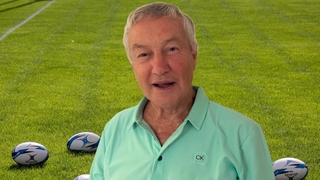
Phil Lewis is a Rugby Legend with a Voice to Match

15 February 2025, 1:30 AM

Phil Lewis doesn’t think of himself as a legend. But then again, neither did the blokes who played beside him at Kiama Rugby Club, even as they were running alongside Wallabies.Three Wallabies played for Kiama in those days – Geoff Shaw, Brian Weir and Garry Grey. Not bad for a country rugby club.I wasn’t the fastest, I wasn’t the biggest,” he says, with the kind of self-deprecation that makes you immediately warm to him. “But I was there.” And was he ever. Phil started his rugby journey in Wales before arriving in Sydney with wife Hazel in 1964 to both take up teaching posts in western Sydney.By the time he moved to the Illawarra in 1966, he was well and truly embedded in the game.  He played for Kiama for a decade, captained, coached, and was part of the team that initiated, organised and won the inaugural Kiama Sevens.The 7’s that still flourishes and virtually kicks off the rugby season in NSW each year. His rugby career should have been enough for one lifetime.  Back then, rugby union was a strictly amateur game.This photo, taken from an Illawarra Mercury article at the time, captures Phil Lewis during his rugby career. A talented hooker-forward and Illawarra Rugby Union captain, Lewis was selected for major representative squads. Despite his skills and dedication, he missed key opportunities to play internationally, because his employer wouldn’t grant him leave, one of the many challenges faced by amateur-era rugby players balancing work and sport.Rugby league, though? That was professional. And never the twain should meet - at least, not officially. But this was country footy. Players weren’t about to sit idle for half a weekend. “In the early days a few of the boys played union one day, league the next,” Phil recalls, barely suppressing a grin. “You could get banned for it, so they all played under a nom de plume. And if someone spotted them? Well, that was just their twin brother out there, wasn’t it?” But rugby, like life, changes. Phil stopped playing at 40 and, missing the game, took up refereeing. That didn’t quite work out. Turns out, refs don’t get invited for drinks. Or if they do, the conversations tend to be about everything they supposedly did wrong. So, Phil turned to golf instead. And, true to form, he didn’t just play - he helped found the Jamberoo Golf Club. A different game, but the same philosophy: sport is about community, about mateship, about belonging. Phil was President of the Jamberoo Golf Club for 20 years. And nothing embodied that more than the Brighton Hotel, Kiama Rugby’s de facto clubhouse. Players, coaches, visiting teams - all of them found their way there after a game.  It wasn’t just about the beer. It was about the stories, the camaraderie, the history. When The Brighton was demolished in the 1980s, the whole town felt it. The rugby club built a new clubhouse at the showground, but something had shifted. The old ways were fading. These days, Phil channels his energy into something different, his voice. A long-time member of the Kiama Men's Probus Choir, he brings the same dedication and spirit to music as he did to rugby.He’s passionate about growing the choir’s numbers and even made a pitch to The Bugle to help spread the word. Phil doesn’t go to many games anymore.He watches from a distance, tells stories when asked. His memory is sharp, his love for the game is undiminished.And if you ever find yourself at a gathering where Phil Lewis is present, do yourself a favour, ask him about the time he found himself coaching a team that had no intention of listening.‘You give them a plan, and five minutes later, they’re doing something entirely different,’ he says, shaking his head. ‘But that is ‘Rugby’. The game flows, fifteen blokes of all shapes, sizes and talents combining to produce another game of rugby. - ‘ The Game they Play in Heaven’.

Alan Swan shares the community at the beating heart of Kiama Surf Lifesaving Club

10 February 2025, 12:00 AM

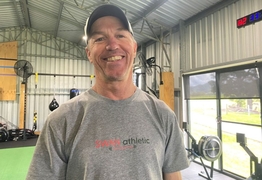
Alan Swan is a much-loved Jamberoo local whose dedication to both fitness and community shines through in everything he does.In 2022 his small gym, Swan Athletics, topped the fundraising efforts in Australia for Gotcha4Life’s 24-hour row, raising nearly $18,000 - more than any other participating club nationwide. Thanks to his team’s efforts, the Foundation’s mental health program is now making a lasting impact in Jamberoo.Alan’s contributions extend beyond the gym and into the surf, where he plays a vital role in the Kiama Surf Lifesaving Club. His journey highlights the importance of surf lifesaving clubs in keeping beaches safe while fostering a strong sense of community. Having joined the club later in life, Alan’s experience reflects the diverse range of people who come together to make the club a success and the opportunities available for everyone, regardless of background or skill set.Alan’s involvement began in his youth when a friend suggested he try surfboat rowing. Though he took a 35-year break to focus on his career and family, Alan returned to the club at 55, reigniting his passion for rowing. “I’m not a strong swimmer,” Alan admits. “That’s why I ended up in the rowboat, but there’s still a role for everyone on patrol, whether it’s first aid, communications, or crowd management.”The Kiama Surf Lifesaving Club is much more than a place for athletes. It thrives on the contributions of a wide variety of members, from seasoned water experts to those who prefer to stay onshore. “You don’t have to be a strong swimmer or surf lifesaver,” Alan explains. “Everyone has a role, whether it’s on the radio, preparing equipment, or helping with first aid when someone is brought in.”The club recently introduced a flexible patrol system, making it easier for members to contribute without rigid scheduling. “We’re a small club, so it’s important to keep things flexible,” Alan says. “This approach ensures we can attract more volunteers and avoid overburdening the same people.”Alan is quick to praise the commitment of his fellow members. “Community volunteers dedicate an amazing amount of time to patrols and training. They’re the backbone of the club, and their dedication inspires everyone else to step up.” The club’s camaraderie was especially evident during the George Bass Marathon, where teamwork and shared effort were crucial to success.KSLSC camaraderie was evident during the George Bass Marathon, where teamwork and shared effort were crucial to success.Beyond the technical skills, Alan values the leadership and quick decision-making fostered through lifesaving. “When you’re on the frontline, whether it’s a rescue or managing an emergency, you’ve got to be decisive and calm,” he says. “The training prepares you for that, and it’s something every young person should have a chance to learn.”Alan also sees the club as a vital way to educate the community about water safety. He recalls the frequent rescues of visitors unfamiliar with the dangers of rips. “Many people simply don’t know what to look out for,” Alan says. “We see people walk straight into a rip without realising it. That’s where the education we provide makes such a difference.”The Kiama Surf Lifesaving Club not only saves lives but also builds lasting friendships and strong community ties. Alan reflects on how his involvement has introduced him to a new circle of friends, adding, “Being part of the club has given me so much more than just a chance to row. It’s a way to give back and be part of something bigger.”With a history of service and a commitment to adapting for the future, the Kiama Surf Lifesaving Club remains a cornerstone of the community, and Alan Swan embodies the spirit that keeps it thriving.

601-620 of 1460